
A warehouse is rarely targeted through its strongest door. Break-ins often start at a side entry that is left unsecured, a roller door with worn hardware, a copied key that was never returned, or a gap in how staff and contractors access the site. The best security upgrades for warehouses address those everyday weak points before they become a costly incident.
For warehouse owners, facilities managers and property managers, security needs to do more than deter intruders. It must keep stock, tools, vehicles, staff and sensitive business information protected without slowing down legitimate work. The right approach combines quality physical security with clear control over who can enter, where they can go and when their access should end.
Start with the warehouse’s real risk points
Before replacing locks or installing new technology, inspect the entire site as someone looking for an easy way in. Check pedestrian doors, roller doors, loading docks, emergency exits, gates, office doors, plant rooms, roof access and any shared areas. Do this after hours as well, when poor lighting and quiet areas are easier to identify.
A warehouse with high-value stock will need a different level of protection from one storing low-risk consumables. Likewise, a busy site with shift workers, delivery drivers and contractors has a bigger access-control challenge than a warehouse run by a small permanent team. The best upgrade is not always the most expensive one. It is the one that closes the most likely gaps in your operation.
Upgrade external doors with commercial-grade locks
External personnel doors deserve close attention. Residential-style locks, ageing deadlocks and damaged door frames can give a false sense of security, particularly on a commercial site exposed to frequent use.
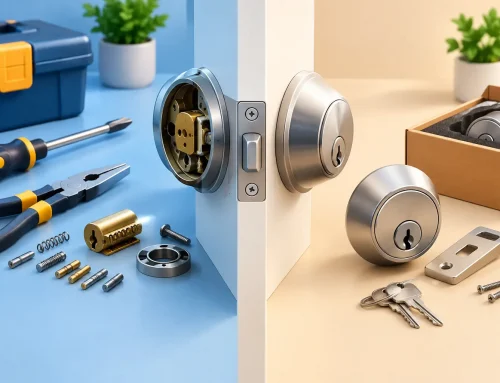
A commercial-grade deadlock, mortice lock or high-security lock system can significantly improve resistance to forced entry. However, the lock is only as strong as the door and frame around it. A solid lock fitted to a weak hollow-core door, loose strike plate or deteriorated frame will not deliver the protection you expect.
Consider reinforcing strike plates, hinges and door frames at the same time. Outward-opening doors may need hinge protection, while steel doors and fire doors require hardware that suits their construction and compliance requirements. Emergency exits must always allow safe egress, so any changes should be planned carefully rather than simply adding another lock.
Do not overlook roller doors and loading areas
Roller doors are a common warehouse vulnerability because they are large, heavily used and sometimes left partially open during deliveries. Manual roller doors may benefit from purpose-built locking hardware, while motorised doors need secure controls, maintained safety features and protection for the override mechanism.
Loading docks also need practical procedures. A secure door is of limited value if it remains open while no one is supervising the area. Clear rules for deliveries, visitor sign-in and end-of-shift checks help ensure security hardware is used properly.
Move from shared keys to restricted key systems
Standard keys are easy to copy, and businesses often lose track of them over time. Former staff, contractors, cleaners and previous tenants may still have access long after they should not. Changing every lock after each staffing change is costly and disruptive.
Restricted key systems provide a stronger level of key control. Keys cannot be duplicated without authorisation, giving management a clear process for issuing and recovering them. A well-designed system can also create different access levels, so warehouse staff, office staff, maintenance providers and managers only receive keys for the areas they genuinely need.
For larger premises, a master key system can reduce the number of keys carried by trusted staff while preserving separation between zones. For example, a manager may hold one key that opens the main gate, office and stock areas, while a contractor’s key only opens a designated service room. The trade-off is that master key systems require disciplined planning. If a master key is lost, the potential exposure is greater, so key registers and prompt reporting are essential.
Consider electronic access control for changing teams
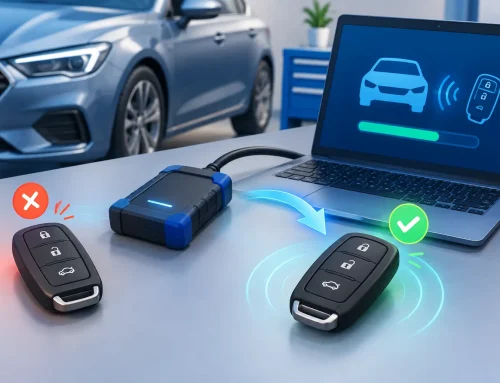
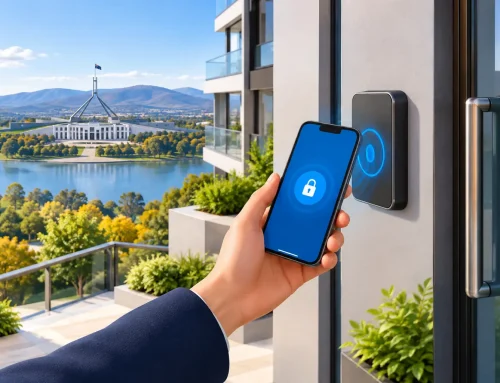
Electronic access control is one of the most useful security upgrades for warehouses with multiple staff, shifts or external visitors. Instead of relying solely on physical keys, authorised users can enter using cards, fobs, PINs or mobile credentials.
The major benefit is control. Access can be added or removed quickly when someone starts, leaves or changes roles. Managers can restrict certain doors to particular people and set access times, such as allowing warehouse staff in during rostered hours while limiting office access after hours.
Many systems also provide an audit trail showing when a door was accessed. This is valuable when investigating stock discrepancies, unauthorised entry or a door that has been left unsecured. It is not about treating staff with suspicion. It is about having reliable information when something does not add up.
Electronic systems do require ongoing management. Someone needs to review permissions, remove inactive users and ensure credentials are not shared. Choose a system that suits the size of the site and the people who will administer it. A complicated system that no one maintains soon becomes another security gap.
Separate high-value stock from general access areas
Not every part of a warehouse needs the same protection. Creating layers of security means a person who gets through the front gate still cannot immediately reach high-value items, IT equipment, controlled products or confidential records.
Internal security doors, cages, lockable storage rooms and separate access permissions can make theft more difficult and more visible. This approach also reduces loss from opportunistic internal theft, which is often harder to identify than a forced break-in.
Keep valuable stock away from external walls and easy-to-reach doors where practical. Secure keys, remotes and access cards in a controlled location rather than leaving them in an unlocked office, vehicle or desk drawer. Small changes in storage routines can prevent a quick entry from becoming a major loss.
Secure gates, fences and perimeter access
The perimeter sets the first boundary for intruders. Gates should close and lock reliably, with chains, padlocks and fittings chosen for commercial use rather than convenience alone. A high-quality padlock cannot compensate for a weak hasp, loose gate frame or exposed fixing points.
Where vehicle access is required, consider how drivers enter outside normal operating hours. Shared remotes and gate codes can quickly become unmanageable. Controlled remotes, keypad codes that are changed regularly, or access credentials linked to individual users offer better accountability.
Good perimeter lighting matters as well. It improves visibility for staff arriving early or leaving late and makes concealed access points less attractive. Lighting should cover gates, loading bays, side passages and staff parking areas without creating glare that hides movement or affects nearby properties.
Make key and access management part of daily operations
The strongest lock cannot fix poor key control. Keep a current register of all keys, fobs, remotes and cards, including who has them and which doors or areas they open. Recover access items on an employee’s final day, not weeks later. If an item cannot be accounted for, act promptly and assess whether locks, credentials or codes need to be changed.
This is particularly important for leased warehouses and sites with frequent contractor access. Rekeying after a tenancy change, lost key or security concern is often a sensible precaution. It is usually less expensive than dealing with theft, interrupted operations and the uncertainty of who may still have access.
Choose upgrades that work together
There is no single product that makes a warehouse secure. Strong external locks, restricted keys, access control and sensible internal zoning work best as a connected system. Cameras and alarms can add another layer, but they should support sound physical security rather than replace it.
A professional site assessment can identify whether the immediate priority is a weak door, uncontrolled keys, an exposed roller door or a lack of separation around high-value stock. For Canberra businesses, Night & Day Locksmiths can help assess commercial access points and recommend practical upgrades that match the site, budget and daily workflow.
Security is easiest to manage when it becomes part of normal warehouse operations. Review access after staff changes, inspect doors and gates before faults worsen, and treat lost keys or remotes as a security event rather than a minor inconvenience. Those habits keep the site protected long after the initial upgrades are complete.