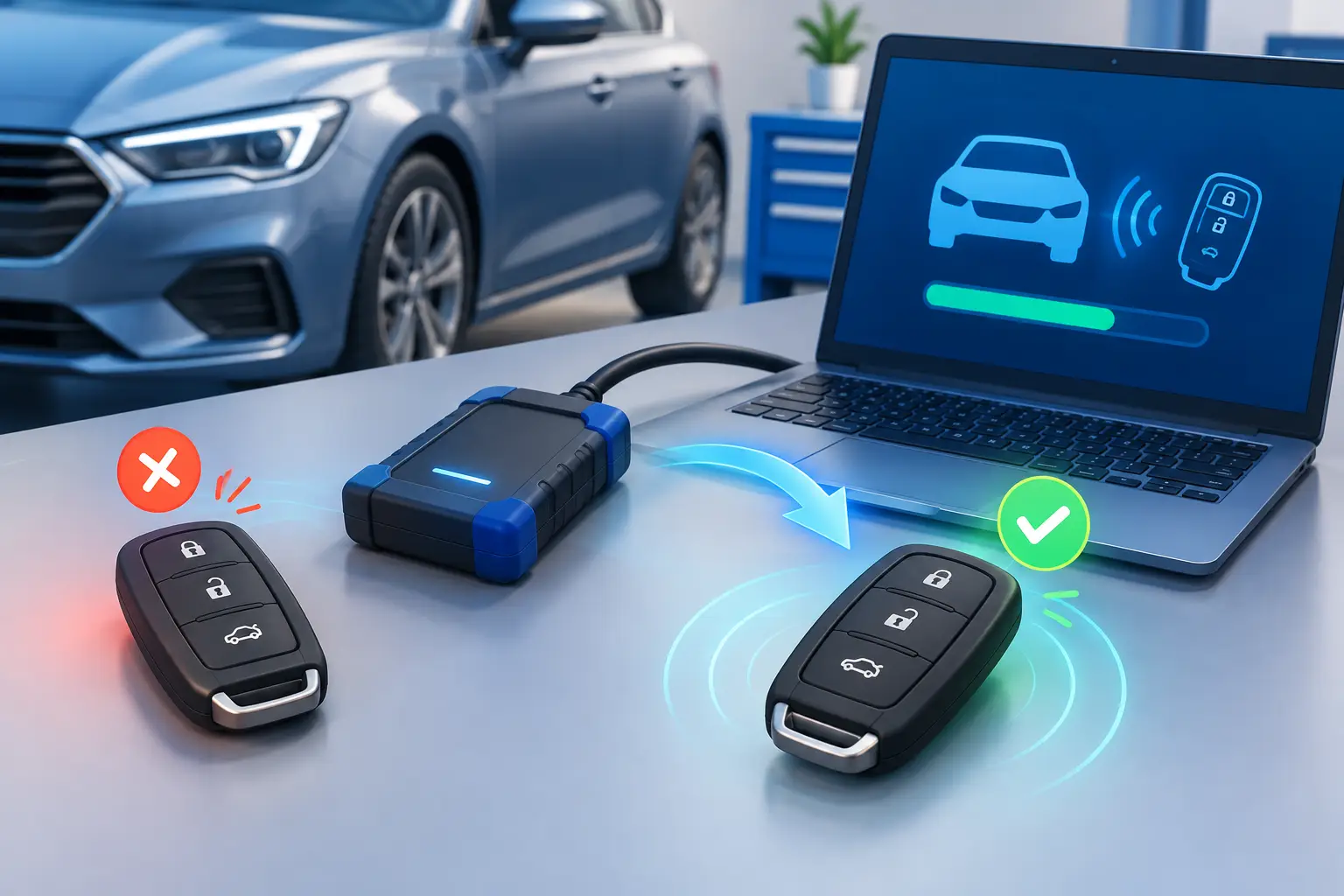
A remote that suddenly will not unlock your car can turn a normal school run, workday or late-night trip into a frustrating wait. Car remote programming is often the answer, but the right fix depends on whether the fault is in the remote, the vehicle key, the car’s receiver or its immobiliser system.
Modern vehicle keys do far more than open a door. They communicate with your vehicle to operate central locking, disable the immobiliser and, in many models, allow push-button starting. When that communication is lost, a fresh battery may help – or the key may need professional testing, repair, replacement and programming.
What car remote programming actually does
Car remote programming matches a remote or key to a specific vehicle. It allows the remote buttons to communicate with the vehicle’s locking system and, where required, synchronises the transponder chip with the immobiliser.
These are related functions, but they are not always the same thing. A remote may unlock the doors but fail to start the car if its transponder is not correctly programmed. Likewise, a key may start the vehicle while the remote buttons do nothing because the central-locking function has lost synchronisation or the remote itself has failed.
That distinction matters when arranging assistance. Programming only the remote locking function may not solve a no-start problem. A qualified automotive locksmith can identify which part of the key system is at fault before recommending the work required.
Signs your car remote may need programming
A flat remote battery is a common and relatively simple cause of trouble. If replacing the battery does not restore operation, programming may be needed, particularly after the remote has been dropped, exposed to moisture or left unused for a long period.
You may need car remote programming if the buttons no longer lock or unlock the vehicle, a replacement remote has been purchased, the remote works only intermittently, or the car displays a key or immobiliser warning. It may also be required after a vehicle battery issue in some makes and models, although a flat car battery can create other symptoms that need checking first.
If you have lost every working key, the situation is more urgent. The vehicle may need a new key cut and programmed from scratch. This is not simply a matter of copying the metal blade. The electronic chip must be correctly matched to the vehicle before it can start.
Remote programming, key cutting and transponder coding
People often use these terms interchangeably, but each describes a different part of the job.
A key blade is the physical piece of metal that turns in the door or ignition. Key cutting shapes it to suit your vehicle’s lock. The remote is the button-operated unit used for central locking. A transponder is the small electronic chip that communicates with the immobiliser. Smart keys and proximity fobs combine several of these functions and may let you unlock and start the car without inserting a key.
A replacement vehicle key may require all three services: cutting the blade, programming the remote and coding the transponder. In other cases, only one function needs attention. For example, if your existing key starts the vehicle but its case is cracked and the buttons have worn out, the electronics may be transferred or a replacement remote may be programmed without changing the immobiliser coding.
The vehicle’s make, model, year and key type affect the process, the time involved and the available options. Older cars can sometimes be programmed using a manufacturer-specific sequence. Most newer vehicles require professional diagnostic equipment, security access and the correct compatible key or remote.
Why DIY programming is not always the bargain it seems
Online remotes can look like a quick, low-cost solution. Some are suitable, but there are risks. A remote can have the wrong frequency, an incompatible circuit board, poor build quality or no usable transponder chip. Even where it looks identical to your original key, it may not suit your vehicle’s system.
DIY instructions can also be misleading. A process that works for one year or variant of a model may not work for another. Repeatedly attempting incorrect procedures can waste time when you are already locked out or stranded. More seriously, poor-quality replacement keys can create unreliable starting or locking problems later.
There is a place for simple checks at home. Replace the battery with the correct type, inspect the battery contacts, and try your spare key if you have one. If the spare key works, the fault is likely with the original remote rather than the vehicle. If neither key works, or the car will not recognise a key, professional diagnosis is the sensible next step.
What a locksmith can check on site
A mobile automotive locksmith can assess the problem where the car is parked, which is particularly useful when the vehicle cannot be started or safely driven. The first step is usually to confirm the vehicle details and test the existing key or remote.
Depending on the fault, the work may involve replacing a remote battery, repairing or replacing a damaged key shell, cutting a replacement key, supplying a compatible remote, or programming a transponder and remote to the vehicle. If keys have been lost or stolen, existing keys may also be removed from the vehicle’s memory where the system allows. That reduces the chance that a missing key can later be used to access or start the car.
Vehicle ownership and identification will need to be confirmed before new keys are made or programmed. This protects you, your vehicle and everyone else on the road. A professional locksmith should be clear about what is being supplied, what functions will work, and whether further repairs are needed.
When speed matters after a lost or failed key
A failed car remote is more than an inconvenience if you are locked out at night, stuck away from home or unable to get to work. Avoid forcing the door or attempting to bypass the ignition. Those actions can damage locks, weather seals, window mechanisms or security components, creating a more expensive repair.
If you still have access to the vehicle but the remote has failed, keep the key safe and avoid leaving it inside the car while testing it. If the vehicle uses a proximity key, check whether there is an emergency mechanical key hidden in the fob. Many models have one, though its location and use vary.
For Canberra drivers, changing temperatures and busy daily schedules make it worthwhile to arrange a spare key before the only working one fails. A spare does not need to sit unused in the glovebox, where it offers little help during a lockout. Keep it somewhere secure and separate from the vehicle, and make sure it has been tested.
Choosing help for car remote programming
The lowest advertised price is not always the lowest final cost. Ask whether the quote includes the remote or key, cutting, transponder coding, remote programming, call-out attendance and testing. A clear explanation is especially useful for smart keys, keyless entry systems and vehicles with more complex security requirements.
Look for an established, fully licensed locksmith with proper automotive capability, rather than relying on a generic replacement remote with no support if it fails. Experience across different vehicle makes matters because programming methods and key technology vary widely.
Night & Day Locksmiths has supported Canberra drivers since 1979 with mobile automotive locksmith assistance when vehicle keys, remotes and ignitions create an unexpected problem. Whether the issue is a dead remote, a damaged key or no working key at all, getting the fault properly identified is the quickest path back to a vehicle you can lock, unlock and start with confidence.
A working spare key is one of the simplest forms of roadside preparation. If yours is missing, worn out or unreliable, arranging it before the next remote failure can save a great deal of stress.