A key can snap without much warning. It may happen as you rush out the front door, return home after dark, or try to start the car before work. The aim is to remove snapped key safely, without pushing the broken piece further into the lock or turning a small problem into a damaged lock, door or ignition.
The most useful first step is also the hardest when you are stressed: stop turning the key. A broken key is usually a sign that the key, lock or both need attention. Forcing what remains can jam the lock mechanism and make extraction more difficult.
Act quickly, but do not force the lock
Leave the lock in the position it was in when the key broke. If the key snapped while sitting straight up and down, keep the cylinder in that position. Do not try to rotate it with a screwdriver, another key or pliers. Turning a lock while a key fragment is inside can lodge it behind internal components.
Check how much of the key is visible. If a few millimetres are protruding and you can grip them firmly, removal may be straightforward. If the break is flush with the keyway or has disappeared inside the lock, a careful approach matters much more than strength.
Avoid adding oil, household lubricant or multipurpose spray as a first response. These products can attract grit and may leave residue inside the mechanism. A dry graphite product designed for locks can sometimes help a stiff cylinder, but it will not pull out a key fragment. Use it sparingly and only if you are confident the key has not been forced deeper in.
Assess whether a safe home attempt is realistic
A home attempt may be reasonable when the lock is accessible, the key fragment is clearly visible, and the door is unlocked. It is not a good time to experiment if you are locked out, the lock is part of a fire door or restricted access system, or the broken key is in a vehicle ignition.
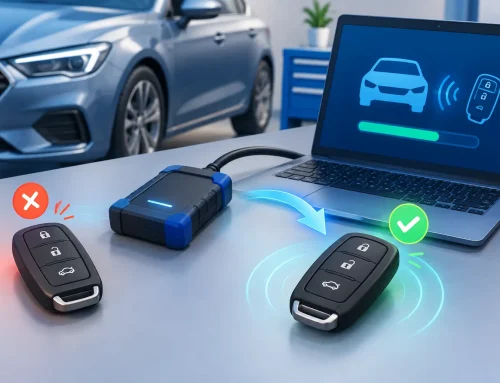
Automotive keys need special care. Modern vehicle keys can include transponder components, and ignition barrels can be damaged by improvised extraction. If the key has snapped in the ignition, do not keep trying to start the vehicle or use tools that could scratch or distort the barrel. A mobile automotive locksmith can extract the fragment and advise whether a replacement key is needed.
For a home or business lock, look at the break itself. A clean break caused by a worn key may leave the lock in sound condition. A break caused by stiffness, misalignment or excessive pressure could indicate that the cylinder or latch needs repair as well. Removing the fragment alone may not prevent it happening again.
How to remove a snapped key safely at home
If part of the key is sticking out, use fine-nose pliers or tweezers with a firm, straight grip. Pull directly out along the same line the key entered. Do not twist. If the fragment does not move with light, steady pressure, stop rather than squeezing harder. Pliers can easily push a small piece further in or bend it within the lock.
When the fragment is flush with the face of the lock, a purpose-made broken key extractor is the safest DIY tool. These thin tools are designed to slide alongside the key, catch one of its cuts, and draw it back out. Insert the extractor gently along the upper or lower edge of the keyway, depending on the lock and key profile. Once it has passed the broken edge, pull slowly and keep the tool level.
A small jigsaw blade with fine teeth is sometimes used as an alternative, but it comes with a real risk of damaging the lock or hooking internal pins. It is only worth considering if you understand how the tool works, can insert it without force, and have a clear path to the key fragment. For most householders, calling a locksmith is the lower-risk choice.
Do not use super glue. The popular idea of gluing a matchstick, wire or the broken key head to the fragment nearly always creates more trouble than it solves. Glue can run into the keyway and bond internal lock parts, turning a standard extraction into a lock replacement. Magnets are also unreliable because most keys are made from materials that are not strongly magnetic.
Never tap the lock aggressively, drill into the cylinder or poke it with paper clips, screws and kitchen knives. These methods can damage pins, springs and the keyway while still leaving the broken key in place.
Know when to stop and call a locksmith
A locksmith should be your next call if the key is fully inside the lock, the lock feels jammed, the door is locked, or you have already tried once without success. The same applies where a key has snapped in a security screen, sliding door, letterbox lock, garage lock, safe or commercial access door.
For businesses and property managers, fast professional help can protect both security and continuity. A damaged key in a main entry lock may leave staff unable to secure the premises, while a forced extraction can compromise a master key or restricted key system. A licensed locksmith can remove the fragment with the correct tools, inspect the cylinder and provide a properly cut replacement if required.
If you are locked out at night, have children inside, need to secure a vacant property, or cannot start your vehicle, treat it as an urgent callout. A professional can usually resolve the issue without unnecessary damage to the door, lock or ignition. In Canberra, Night & Day Locksmiths provides mobile emergency assistance around the clock, with the equipment to handle residential, commercial and automotive key problems.
Why keys snap in the first place
Keys do not usually break for no reason. Older brass keys can weaken after years of use, particularly around the shoulder where the blade meets the head. Copies cut from worn originals may be thinner or less accurate, which places extra strain on both the key and lock.
A sticky lock can also be the underlying cause. Temperature changes, dust, weather exposure, a misaligned door and worn internal components can all make a key harder to turn. If you need to lift, pull or push a door before the key will rotate, the door alignment may need attention. Continuing to force the key is likely to cause another break.
Vehicle keys often fail after being used as a tool, carrying too many heavy items on the keyring, or being bent in a pocket. Key blades and remote housings can deteriorate gradually. Replacing a worn key before it fails is usually simpler and less stressful than dealing with a broken key in the driveway.
Prevent another broken key
Once the fragment has been removed, do not immediately rely on the remaining half of the key or a damaged copy. Have a new key cut from a reliable original where possible. If the original is worn, a locksmith can assess whether the lock should be serviced, rekeyed or replaced instead.
Keep exterior locks clean and properly maintained, particularly on gates, garages and doors exposed to Canberra’s changing conditions. Use lock-specific lubricant only when appropriate, and address a door that sticks before it begins placing pressure on the key. For rental properties and commercial sites, a regular review of locks, keys and access systems can identify these issues before an emergency callout is needed.
A snapped key is frustrating, but it does not need to become a costly lock failure. Keep the lock still, avoid makeshift fixes, and get experienced help when the fragment will not come out easily. That calm decision is often what saves the lock and gets your day moving again.