A spare key can be a sensible precaution. But when you do not know how many copies exist, or who holds them, it can also become a security gap. Security key cutting is not simply about producing another key that turns in a lock. For homes, businesses and managed properties, it is about controlling access properly.
That distinction matters after a move, a staff change, a tenancy handover or a lost set of keys. A professional locksmith can assess the lock, identify the level of control you need and cut keys that work accurately without compromising the security plan for your property.
What security key cutting actually means
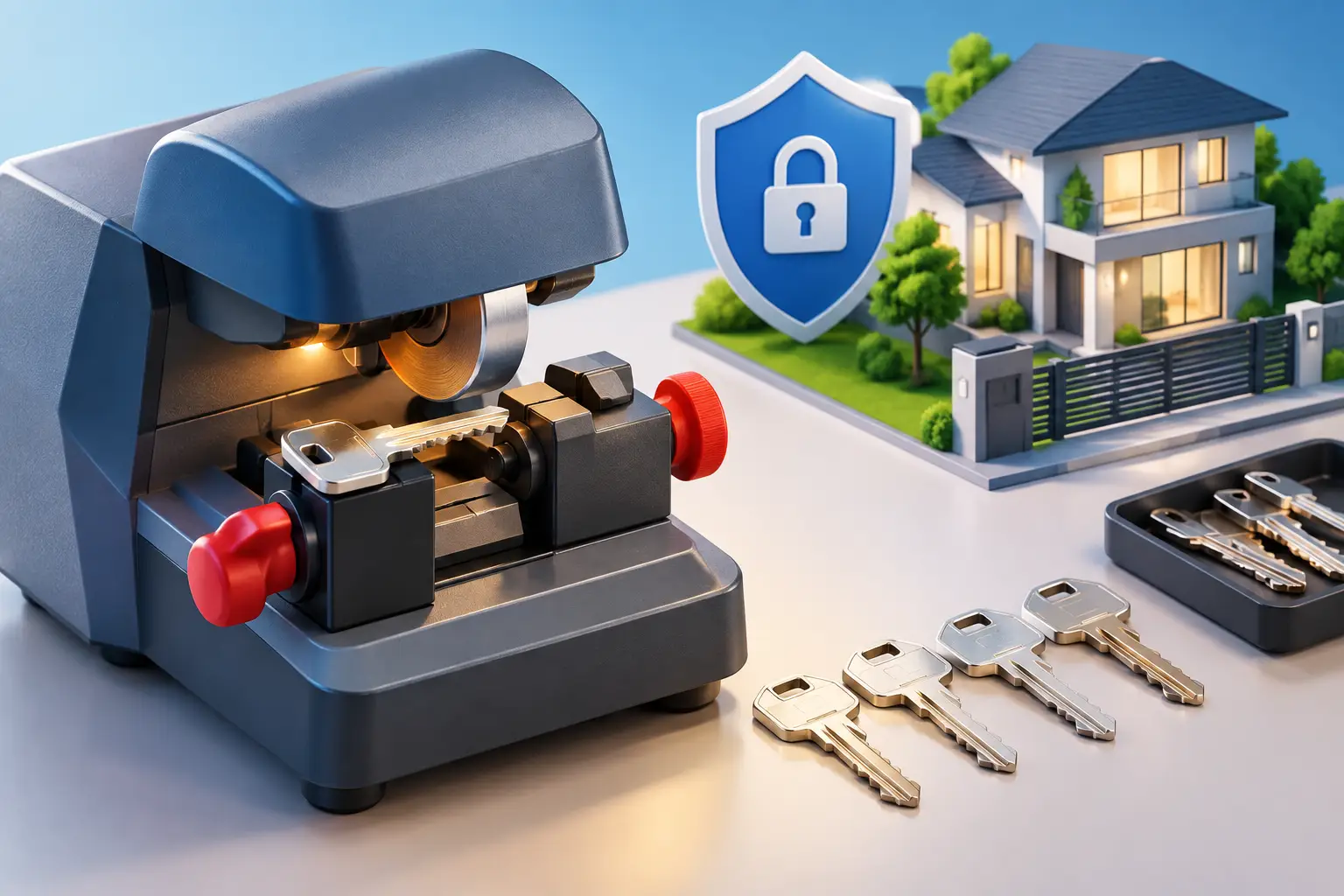
Security key cutting usually refers to the accurate duplication or creation of keys for higher-security locks and controlled key systems. These keys may have specialised profiles, side cuts, dimples, electronic components or restrictions on who can order copies.
A standard house key can often be copied quickly from an original. That may be convenient, but it offers limited control. If a previous tenant, contractor or former employee has a copy, there is often no practical way to know. Security keys and restricted systems are designed to give the property owner or authorised manager greater oversight.
The right approach depends on the lock and the risk. A family home may need a well-made spare key and a rekey after settlement. A medical practice, office, warehouse or strata property may need a restricted key system with an authorised signatory process. The common goal is simple: only approved people should be able to gain access.
Why key control matters more than most people expect
Keys tend to multiply over time. One gets handed to a cleaner, another to a tradesperson, one stays with a former staff member, and a spare is kept in a drawer without anyone recording it. The lock may still be in perfect condition, yet access to the building is no longer controlled.
For homeowners, this can happen after buying an established property or moving into a rental. You may receive two keys at handover, but there could be several more in circulation. Rekeying the locks, then arranging security key cutting for the people who genuinely need access, is often more sensible than relying on unknown copies.
For business owners and property managers, poor key control can create operational problems as well as security concerns. Lost keys can lead to costly after-hours callouts. Too many master keys make it difficult to investigate an incident. A carefully planned system makes handovers cleaner and limits disruption when staff, tenants or contractors change.
Standard keys, restricted keys and master key systems
Not every door needs the same level of protection. A locksmith should help match the system to the property rather than selling a one-size-fits-all solution.
A standard key system is generally suitable where convenience is the priority and the risk is lower. Quality still matters. Poorly cut copies can stick, wear the lock faster or fail when you need them. Having keys cut from the correct blank on properly maintained equipment helps avoid those frustrations.
Restricted key systems provide a higher level of copy control. Depending on the product and system, new keys may only be available through an authorised locksmith and approved by a nominated person. This does not mean a key can never be duplicated. It means there is a clear process before duplication takes place.
A master key system is often useful in commercial buildings, schools, strata sites and larger homes with several access areas. Individual keys can open only the doors relevant to a person’s role, while a master key opens a broader group of doors. For example, a cleaner may access common areas and supply cupboards, while a facilities manager has access to the whole site.
The trade-off is planning. A master key system needs to be designed carefully from the start, with clear records and quality hardware. Adding doors later is possible in many cases, but it is easier and more cost-effective when future needs have been considered early.
When should you arrange security key cutting?
There is no need to wait until a lockout or security incident forces the issue. Arranging keys and reviewing access is worthwhile whenever control may have changed.
Consider a professional review when you have:
- moved into a home, office or newly purchased commercial premises
- lost keys, had keys stolen or cannot account for all copies
- changed tenants, staff, cleaners, contractors or managing agents
- installed new locks, access control or a master key system
- found that existing keys are worn, hard to turn or copied inconsistently
If a key is lost but you are confident it cannot be linked to your address or business, cutting a replacement may be enough. If the lost key had identifying information, was taken with other property, or could be traced to a particular door, rekeying or replacing the cylinder is usually the safer decision. A locksmith can explain the practical difference and help you avoid paying for more work than the situation requires.
The difference a properly cut key makes
A key may look straightforward, but small inaccuracies matter. Cuts that are too shallow, too deep or poorly aligned can damage pins inside the cylinder and cause intermittent operation. This is especially frustrating in a front door, roller door, filing cabinet or ignition, where the key may work once and fail the next time.
Professional security key cutting starts with identifying the key type and the correct blank. For restricted keys, the locksmith will follow the system’s authorisation requirements. For worn keys, copying directly from the damaged original may reproduce the wear rather than restore the key to its intended specification. In some cases, cutting from a key code or assessing the lock is the better option.
This is one reason cheap copies are not always good value. The upfront saving can disappear if a badly cut key jams, breaks or contributes to lock damage. Accurate cutting and testing protect both the key and the lock it operates.
Keeping control after the keys are cut
A restricted system works best when the people responsible for it follow a simple process. Nominate who can approve new keys, keep a record of keys issued, and collect keys promptly when a tenancy or employment arrangement ends. For larger sites, label keys by an internal reference rather than printing the business name and address directly on them.
It is also worth separating convenience from security. Hiding a spare under a pot plant, doormat or meter box gives an intruder an easy first place to look. A secure key safe may be appropriate for approved emergency access, particularly where carers, property managers or trades need entry, but the code should be controlled and changed when circumstances change.
For businesses, review access alongside other security measures. A strong restricted key system may be the right answer for some doors, while high-traffic or remotely managed areas may benefit from electronic access control. Physical keys remain reliable and practical, but they should be part of a broader plan where the property requires it.
Choosing the right locksmith for controlled keys
When access to your property is at stake, look beyond the price of a single copy. An established, fully licensed locksmith can identify compatible hardware, explain whether your current locks can be rekeyed, and provide a system that suits the way your household or business operates.
Ask how authorisation is handled for restricted keys, whether the locksmith can support the system as your needs change, and what records you should keep. For urgent situations, it also helps to choose a local provider with genuine after-hours capability rather than relying on an unknown operator when a key fails late at night.
Night & Day Locksmiths has supported Canberra properties since 1979, from straightforward replacement keys to restricted key and master key arrangements for homes, businesses and managed sites. The right solution should feel practical, not complicated.
A well-controlled key system gives you something more useful than another piece of cut metal: confidence that access to your property is in the right hands. If that confidence has been lost, a timely review is often the simplest place to start.