
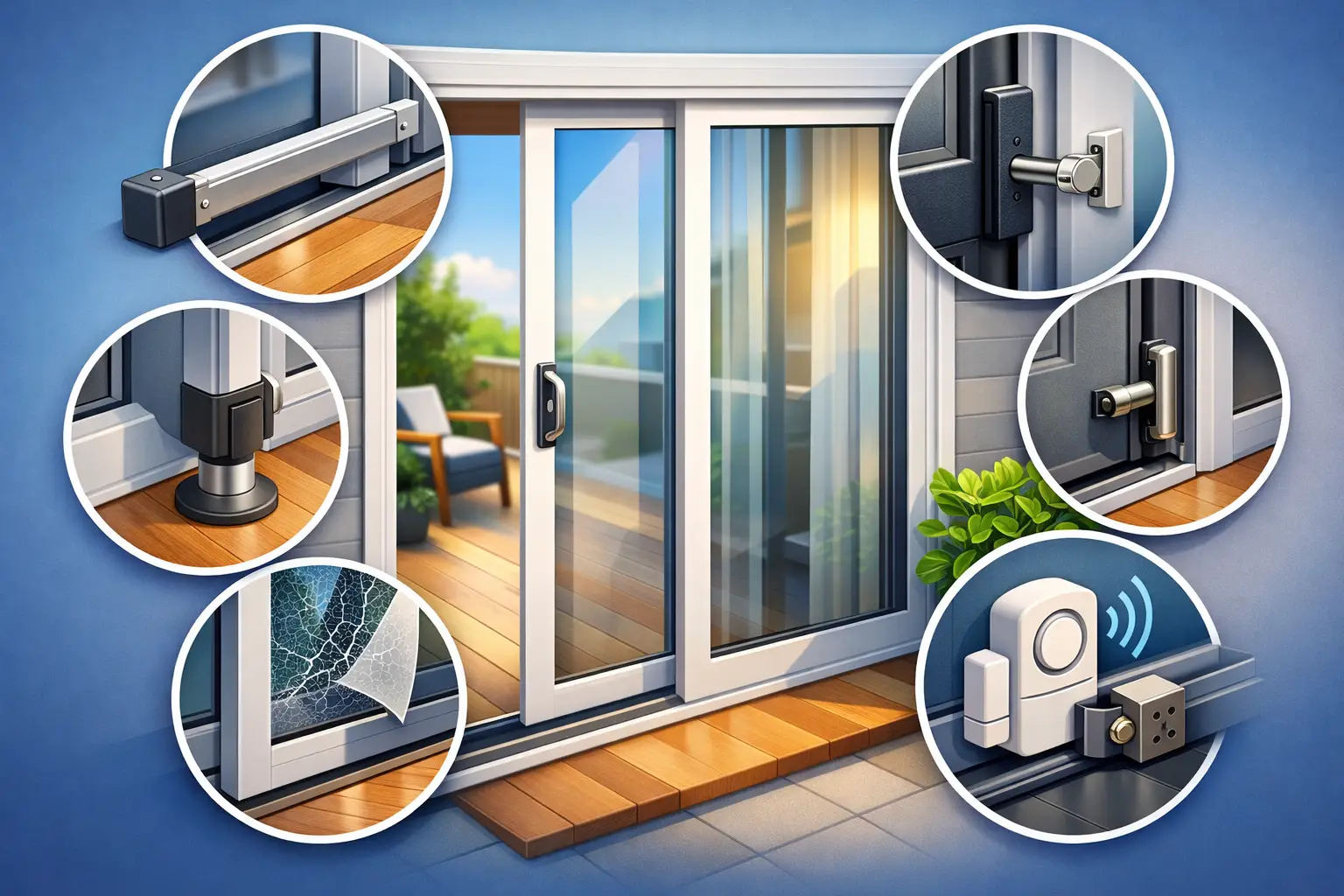
A sliding door can look fully closed while offering far less resistance than a properly secured hinged entry door. For homes with a rear patio, courtyard or balcony, securing sliding doors deserves the same attention as the front door – particularly if the door is older, loosely fitted or hidden from street view.
The good news is that most sliding door weaknesses can be improved without replacing the whole unit. The right approach depends on the door’s frame, the existing lock, how the property is used and whether it must remain an emergency exit. A licensed locksmith can assess these details and recommend practical upgrades that suit the property rather than fitting a one-size-fits-all solution.
Why sliding doors need extra attention
Most sliding doors rely on a relatively small latch built into the handle. It may keep the door shut in normal use, but it is not always designed to resist lifting, forcing or manipulation. Worn rollers and a poorly adjusted frame can make the problem worse, allowing the moving panel to be lifted from its track or leaving a gap around the locking point.
Glass is another consideration. A large glass panel gives plenty of light and improves access to outdoor areas, but it can also give an intruder a clear view of the latch. Doors at the side or rear of a home are often less visible to neighbours, especially at night.
For a business, the risk can be higher. Sliding doors at shopfronts, offices, storage areas and common property entries may be used by several people each day. A lock that is left partly engaged, a damaged track or uncontrolled key access can quickly become a security issue.
Start by checking the lock and door fit
Before adding any extra hardware, check whether the existing door is working as it should. Close the door and operate the lock slowly. It should engage cleanly without lifting the panel, forcing the handle or pulling the door back into position. If it is difficult to lock, do not assume a stronger lock alone will fix it.
A locksmith may be able to adjust the rollers, align the strike and inspect the frame for movement. This improves daily use and helps any upgraded lock engage properly. It also reduces the temptation to leave the door unlocked because the mechanism is frustrating to use.
Look for signs that need prompt attention: a loose handle, a latch that does not fully catch, damaged screws, a panel that rattles in the frame, or a door that can be lifted noticeably when shut. These faults are common on ageing doors and can undermine otherwise sensible security measures.
1. Upgrade the primary sliding door lock
A quality keyed sliding door lock is usually the most useful first upgrade. It provides a positive locking point rather than relying solely on the original handle latch. The most suitable style will depend on whether the door is aluminium, timber or uPVC, and whether it slides internally or externally.
For residential doors, the aim is to improve security without making everyday access awkward. For commercial premises, a restricted key system may be worthwhile where several staff, contractors or tenants require access. Restricted keys offer better control over duplication and make it easier to respond when keys are not returned.
Be cautious with locks that require a key to exit from inside. They can offer extra protection in some circumstances, but they may not be appropriate if the sliding door is a required escape route. Fire safety and quick exit must always be considered before fitting any internal keyed lock.
2. Fit an anti-lift device
Many sliding panels can be lifted upwards enough to clear the lower track. An anti-lift device limits that movement and can be a simple but effective improvement. Depending on the door, it may involve correctly positioned screws, purpose-made blocks or hardware fitted at the top of the frame.
This work needs to be measured carefully. A poorly placed screw can damage the frame, interfere with the door’s operation or fail to prevent lifting. It should stop excessive upward movement while still allowing the door to slide freely and be removed safely by a professional when maintenance is needed.
An anti-lift measure is particularly valuable where the door has old rollers or a noticeable gap at the top. It is not a replacement for a lock, but it makes forced removal of the panel far more difficult.
3. Use a security bar where it suits the door
A security bar or dowel placed in the lower track can prevent the panel from sliding open. It is a straightforward secondary measure for a door that is not used as a main exit. Adjustable metal bars are generally more reliable than a loose piece of timber, provided they fit firmly and do not damage the track.
There is a trade-off. A bar is only effective when people remember to put it in place, and it must be removed quickly to use the door. It should never prevent occupants from escaping during an emergency. Households with children, older residents or anyone who may need fast access outside should consider whether a keyed lock or another professionally fitted option is more appropriate.
4. Improve the glass and surrounding visibility
The lock is only one part of the door. If the glass can be easily broken beside the latch, an intruder may be able to reach through and operate it. Security film can help hold shattered glass together, while laminated safety glass offers a higher level of resistance when the door itself is being replaced or upgraded.
These products do not make glass unbreakable. They are intended to delay entry, create noise and make an attempted break-in more difficult. That delay matters most when paired with good lighting, a visible alarm system or monitored security.
Keep shrubs and stored items away from the door. Tall plants can create cover, while outdoor furniture, tools and bins may provide climbing aids or something to break glass with. Sensor lighting aimed at the approach to the door is often a sensible addition, particularly around Canberra homes where rear yards can be dark for long winter evenings.
5. Do not overlook security screens
A properly fitted security screen can create a separate locked barrier in front of the sliding door. This allows ventilation and daylight while limiting access, which can be useful during warmer weather or when the house is occupied.
Not all screens provide the same protection. A flyscreen is designed to keep insects out, not intruders. Look for a purpose-built security screen with a quality frame, secure fixings and a lock that can be operated safely from inside. The installation matters as much as the screen itself, because weak fixings can defeat an otherwise strong product.
6. Keep tracks, rollers and drains maintained
Security hardware cannot perform properly on a door that barely moves. Dirt, leaves and grit in the bottom track increase wear on rollers and can stop the panel from sitting squarely against the frame. Regular cleaning with a vacuum and a soft brush helps, followed by checking that drainage holes are clear.
Avoid heavy oil-based lubricants that attract more grit. If rollers are noisy, the door drags, or the lock only works when the panel is lifted, arrange an inspection. Repairing the door before the lock fails can avoid a late-night lockout or a door that will not secure after hours.
7. Match key control to the people using the property
A secure door is only as secure as the keys and codes that open it. After moving into a home, taking over a tenancy or losing a set of keys, rekeying the sliding door lock should be considered alongside the front and rear doors. Rekeying changes the lock to accept new keys, so old keys no longer work without necessarily replacing every lock.
Property managers and strata committees should also consider who holds access to shared sliding doors, pool areas, storage rooms and offices. Clear records, restricted key systems and timely lock changes after staff or tenant changes reduce uncertainty.
When professional help is the better option
Some upgrades are suitable for a confident homeowner, but drilling into a door frame, fitting a new lock or changing the glass should not be guesswork. Incorrect work can compromise weather sealing, damage the frame or create an unsafe exit arrangement.
For a door that will not lock, has been forced, or needs urgent attention after a break-in, a mobile locksmith can secure the property and advise on a lasting repair. Night & Day Locksmiths provides licensed locksmith support across Canberra, including practical lock upgrades for residential and commercial sliding doors.
The most effective improvement is often not the most expensive one. A door that is correctly aligned, fitted with an appropriate lock and anti-lift protection, and used with consistent key control gives you a much stronger starting point each time you close it for the night.