A sliding door can give a home plenty of light and easy access to the backyard, but it can also be a weak point if the hardware is worn, basic or poorly fitted. The best locks for sliding doors are not always the most expensive option. They are the ones that suit the door, prevent lifting or forced opening, and allow people inside to leave safely in an emergency.
For Canberra homes, rental properties and commercial premises, the right answer often involves more than replacing the small latch already fitted to the door. Door condition, frame material, security screens, the direction the panel slides and who needs access all matter. A licensed locksmith can assess those details before recommending a lock that provides real protection rather than a false sense of security.
Start with the sliding door, not the lock
Most sliding glass doors have a handle-mounted mortice lock. When the key or thumbturn is operated, a hook-shaped bolt engages with a keeper in the jamb. This is a practical everyday locking system, but its security depends on the quality of the lock body, striker plate, frame and installation.
If the door can be lifted in its track, flexed away from the frame, or opened because the hook no longer aligns with the keeper, a new lock alone may not solve the problem. Worn rollers, loose screws, a damaged frame or an incorrectly adjusted panel can all reduce security. Before choosing an upgrade, make sure the door closes squarely and the existing lock engages fully.
This is especially relevant after years of use. A lock that needs the handle lifted, pushed or jiggled before it catches is telling you something. Do not wait until it fails while the property is vacant or you are trying to secure the house late at night.
The best locks for sliding doors at a glance
Quality hook-bolt mortice locks
For most residential sliding glass doors, a quality hook-bolt mortice lock is the starting point. The hooked bolt resists the door being prised sideways more effectively than a simple spring latch, provided it engages deeply into a properly secured keeper.
Choose a lock designed for the door profile and handle set rather than trying to force a generic replacement into the cut-out. Aluminium, timber and uPVC doors can require different fittings. A locksmith will also check whether the internal thumbturn, external key cylinder and handle position are suitable for the door’s use.
A keyed cylinder on the outside is useful where the sliding door is a regular entry point. However, consider where spare keys are held and who has access to them. If you have recently moved in, changed tenants or lost a key, rekeying the cylinder may be more sensible than relying on old keys still circulating.
Patio bolts and keyed sliding-door bolts
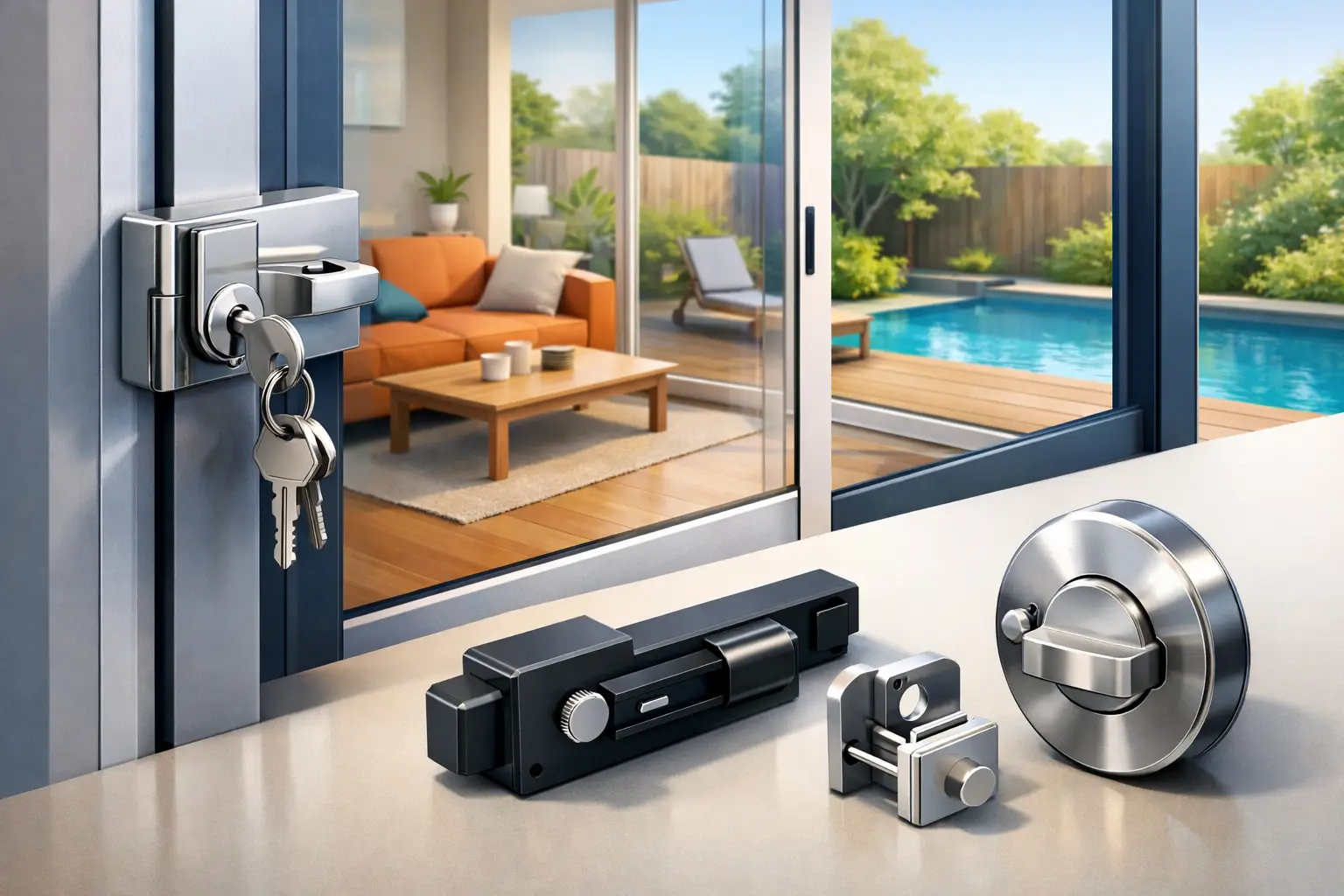
A patio bolt is an additional lock fitted separately from the main handle lock. It usually secures the moving panel to the fixed panel or the frame, adding another point an intruder must defeat. This makes it a strong option for doors that have only a light-duty factory lock.
Keyed bolts can be particularly useful on externally accessible doors, holiday homes and properties left empty for periods. The trade-off is convenience. Everyone who needs to use that exit must know how the lock works and have access to the key if it is required from the inside.
For any door used as an emergency exit, safety comes first. Avoid arrangements that could trap occupants inside during a fire or other emergency. Your locksmith can recommend an internal release method that balances security with safe escape.
Pin locks for added lift protection
Pin locks use a metal pin fitted through the door frame or track area to stop the panel moving. They are simple, discreet and effective as a secondary lock, especially where a sliding door could otherwise be lifted out of its track.
They are not a substitute for a functioning primary lock. Their value is in adding another physical barrier and making opportunistic forced entry harder. Pin locks need accurate positioning, as poor drilling can damage the frame, interfere with the door movement or leave the lock ineffective.
This type of lock can suit aluminium sliding windows as well as some doors, but each application needs to be checked individually. Glass panels, narrow frames and older joinery may limit where hardware can safely be installed.
Track locks and anti-lift devices
Track locks prevent the sliding panel from travelling along its track. Some are removable, while others are permanently fitted. They can be helpful as an extra layer of protection on doors that are not used every day, such as a laundry door, rear patio access or a vacant investment property.
An anti-lift device is different but equally worthwhile. It is fitted at the top of the sliding panel to restrict upward movement, making it harder to lift the door off its bottom track. This addresses a common weakness in poorly adjusted or older sliding doors.
These devices are often best used alongside a hook-bolt lock or patio bolt. One device limits movement, while the other secures the panel in place. That combination is usually more effective than depending on one light-duty lock.
Security screen door locks
A properly fitted security screen door can add useful separation between your living space and the outside. Its lock should be suited to the screen system and securely mounted to the frame, not simply attached to a flimsy flyscreen door.
For homes where ventilation matters, a locked security screen may allow the glass sliding door to remain open while the property stays protected. The quality of the screen, frame, hinges or sliding mechanism and fixing points all affect the result. A good lock cannot compensate for a weak screen frame.
What to look for before you choose
A strong sliding-door security plan should address the door’s likely weak points, not just its key cylinder. Ask whether the lock has a positive bolt engagement, whether the striker can resist force, and whether the panel can be lifted or prised from the frame.
Also think about daily use. A complicated secondary lock may be excellent when the property is empty, but it may be ignored if family members are rushing out the door each morning. The best arrangement is one people will use consistently.
For businesses, strata properties and managed rentals, key control is another consideration. Keyed sliding-door locks can sometimes be incorporated into a master key system, while restricted key systems give property managers greater control over copying. This is often more practical than issuing several unrelated keys for doors, gates and storerooms.
If a sliding door opens onto a balcony or common area, check the body corporate or strata requirements before changing visible hardware. Landlords should also make sure any upgrade meets their obligations and does not interfere with a tenant’s reasonable access or emergency escape.
When replacement is not enough
Signs of a failing sliding-door lock include a loose handle, a key that turns without locking, a hook bolt that misses the keeper, rust, cracked hardware or a panel that rattles in the frame. Forced entry attempts may leave bent strikers, scrape marks or damaged cylinders. These faults should be dealt with promptly, even if the door still appears to lock.
After a break-in, attempted break-in or lost keys, it is wise to review the full door setup. Rekeying may prevent old keys being used, while a secondary bolt, anti-lift device or security screen lock can address the method used to target the property.
Night & Day Locksmiths can assess sliding-door hardware on site and fit suitable lock upgrades for homes, rental properties and commercial premises across Canberra. Professional fitting matters because a well-made lock only performs properly when the door, keeper and frame are aligned.
A sliding door should feel secure without becoming difficult to live with. If yours sticks, lifts, rattles or no longer locks with confidence, having it checked now is far easier than dealing with a lock failure when you need the door secured most.