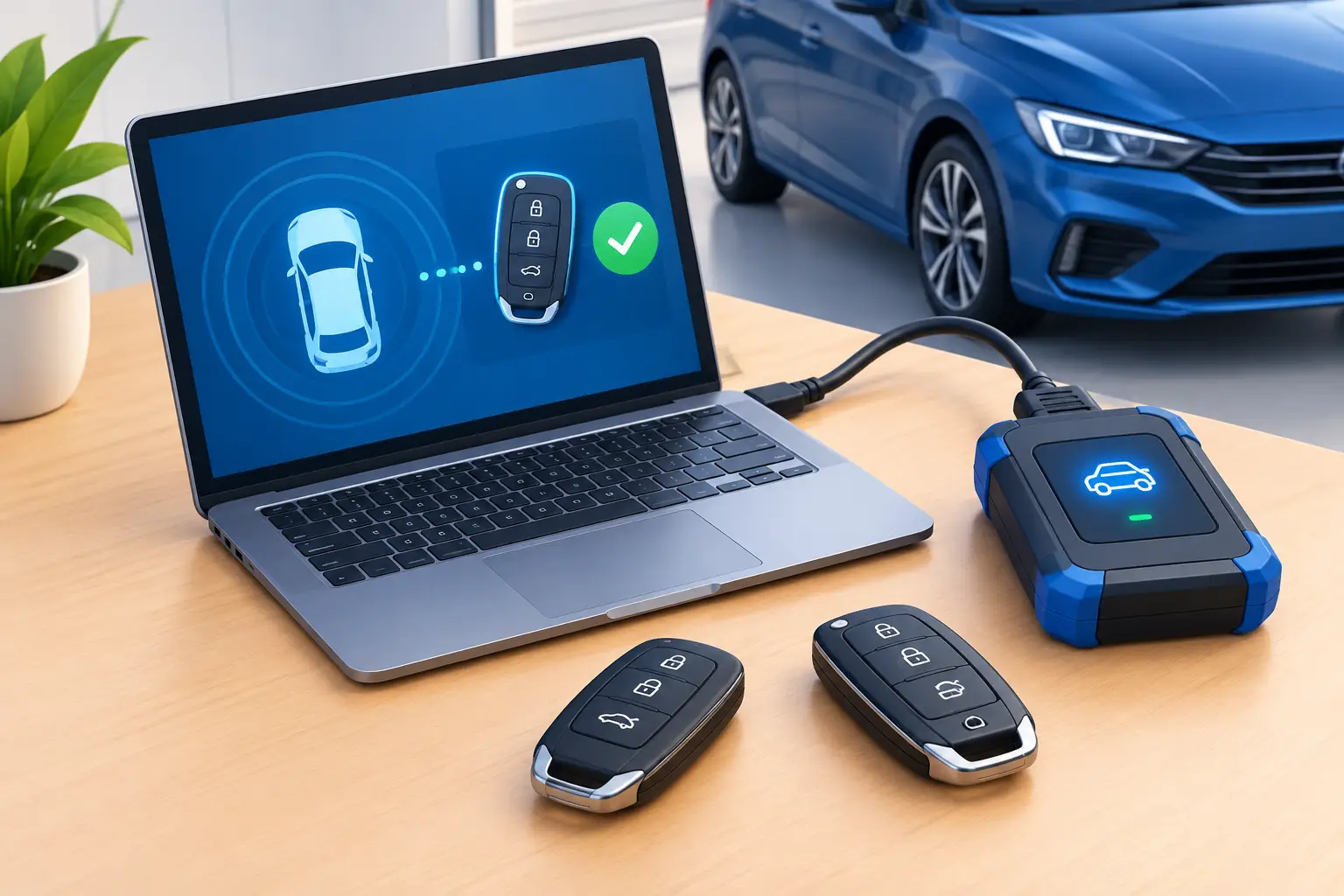
A remote that suddenly stops locking your car can turn an ordinary day into a stressful one. Whether you have lost a fob, bought a spare or replaced a flat battery, knowing how to program car remote keys helps you understand the job, avoid wasted money and get back on the road sooner.
The first thing to know is that not every remote key is programmed in the same way. Some older vehicles allow a simple in-car sequence using the ignition and buttons on the remote. Many late-model cars need specialist diagnostic equipment, security codes or access to the vehicle’s onboard system. The right method depends on the make, model, year and type of key.
What does it mean to program car remote keys?
People often use “programming” to describe several different jobs. They are related, but they are not always the same thing.
A remote control may need to be synchronised so its lock, unlock and boot buttons communicate with the car’s central locking system. A transponder chip inside the key may also need to be registered to the immobiliser so the vehicle will start. Smart keys and proximity fobs add another layer, allowing keyless entry and push-button start.
This difference matters. You might be able to get the buttons working on a replacement remote but still find the engine will not start. Equally, a vehicle may start with a key while the remote buttons do nothing. A qualified automotive locksmith can identify which system has failed before work begins.
When can you program a remote yourself?
Some vehicles, particularly older models, have an owner-programming procedure. It usually involves sitting in the driver’s seat, cycling the key in the ignition and pressing a sequence of buttons within a set time. If your manufacturer’s handbook gives a clear procedure for your exact vehicle, it may be worth trying.
DIY programming is most likely to work when you have an existing working key, the replacement remote is the correct part number and the problem only involves central locking. It can be a practical option after replacing a remote battery or adding a basic spare on an older car.
However, online instructions are not always accurate for Australian-delivered vehicles. A procedure for the same model sold overseas may not apply to your car. Timing can also be precise, and repeated unsuccessful attempts can leave you no closer to a solution.
Do not force the issue if the vehicle has a transponder key, smart fob or push-button start system. These commonly require professional tools to add a key securely. Modern vehicles are designed this way to reduce theft, not to make life difficult for owners.
Check the basics first
Before assuming your key needs programming, check the simple causes. Replace the battery with the correct type and confirm it is fitted the right way around. Look for corrosion in the battery compartment, cracked buttons, a damaged circuit board or water exposure.
If your spare remote still works, test the faulty remote close to the vehicle. If neither remote operates, the issue may be with the car battery, a blown fuse, central locking actuator, receiver or body control module rather than the keys themselves.
Why the correct remote matters
A replacement key or fob can look identical while having different electronics inside. The frequency, chip type, blade profile and internal coding must suit the vehicle. Buying the cheapest remote online can be a false economy if it cannot be programmed, has poor build quality or does not contain the correct transponder.
For vehicles with a traditional metal blade, the blade must also be cut accurately. A badly cut key can damage the ignition or door lock over time. With smart keys, the emergency blade still needs to operate the door manually if the fob battery goes flat.
A locksmith will normally confirm compatibility before cutting or programming a replacement. This is especially useful when the original key has been lost and there is no working remote available for comparison.
When professional programming is the sensible choice
Professional help is usually the safest route when all keys are lost, the car will not start, the remote is a smart key, or you need a replacement in a hurry. It is also appropriate when the vehicle has an immobiliser fault, ignition issue or damaged key housing.
Automotive locksmiths use specialist equipment that communicates with a vehicle’s security system. Depending on the car, they may retrieve security information, cut a new blade, program the remote functions and register the transponder chip. The process should include testing the key fully before the job is finished.
A mobile locksmith can often complete this work at your home, workplace or roadside location. That avoids the cost and inconvenience of towing a vehicle to a dealership, particularly after hours or when the only key is missing.
For Canberra drivers, Night & Day Locksmiths provides mobile automotive locksmith assistance with the practical experience needed for lost keys, remote faults and replacement transponder keys. As with any security work, proof of ownership is required before a new vehicle key can be supplied or programmed.
Lost keys need more than a replacement
If a key has been stolen, rather than simply misplaced around the house, ask about removing the missing key from the vehicle’s memory. Programming a new key alone may leave the old key active, depending on the vehicle.
Deleting lost or stolen keys reduces the chance that someone can return later and use the remote or start the car. It is a small but valuable step, particularly if your registration details or home address were accessible in the vehicle.
It may also be worth reviewing what is attached to the keyring. House keys, garage remotes and identifying tags can create a bigger security problem than the vehicle key itself.
Common mistakes that make key problems worse
The most common mistake is ordering a remote based only on its appearance. Another is assuming a fresh battery will repair a remote with internal water damage or worn button contacts. Some owners also keep trying online programming sequences after the vehicle has clearly not entered programming mode.
Avoid repeatedly turning a key that is sticking in the ignition. The problem may be a worn key blade, a failing ignition barrel or a steering lock issue. Continued force can turn a manageable repair into a more involved one.
Be cautious with second-hand keys as well. Many can be reused only if they are properly reset, while others are locked to their original vehicle. A used smart key is not automatically a bargain just because its shell and buttons look new.
How to avoid being caught without a working key
A working spare is usually far less costly and stressful than an emergency replacement after all keys have disappeared. Keep it somewhere secure away from the vehicle, not in the glovebox or centre console. Test it occasionally, including the manual door blade if your vehicle has one.
If your only key has a cracked case, intermittent buttons or a warning about a low fob battery, arrange a replacement before it fails completely. Remote key faults often give warning signs. Acting early gives you more choice and avoids being stranded outside work, at the shops or late at night.
The best outcome is not just a remote that locks the doors. It is a correctly matched, properly programmed key that starts the vehicle reliably, with a tested spare ready when you need it.