A key that suddenly refuses to turn is more than an annoyance when you are trying to get the kids inside, open the office or start the car. Understanding why keys stick in locks can help you avoid the mistake that turns a stiff lock into a snapped key, damaged door or after-hours lockout.
Most sticking locks give some warning. The key may need a jiggle, feel rough on the way in, or turn only after several attempts. Those small changes are worth taking seriously. A lock does not usually fail without a reason, and forcing it rarely solves the underlying problem.
Why Keys Stick in Locks
A lock and key work through a series of tiny, precisely positioned parts. Inside a common pin-cylinder lock, spring-loaded pins must line up at exactly the right height before the cylinder can rotate. Dirt, wear, a bent key or movement in the door can prevent that alignment by only a fraction of a millimetre – enough to make the key stick.
The cause may be simple and temporary, or it may be a sign that the lock is nearing the end of its useful life. The difference matters, particularly on an external door, a commercial premises or a vehicle you rely on every day.
Dirt, dust and old lubricant
Dust, grit and moisture find their way into locks over time. Canberra’s dry, dusty conditions can be particularly hard on exposed gates, letterboxes and external doors. Old lubricant can also become sticky, trapping fine debris inside the keyway rather than helping the mechanism move freely.
The result is often a key that slides in reluctantly or requires repeated jiggling before it turns. This is one of the more common causes of a sticky lock, but it still needs the right treatment. Pouring household oil into the keyway may make it feel better briefly, then leave a residue that attracts even more dirt.
A locksmith-grade dry lock lubricant is generally the safer option for a standard mechanical lock. Use it sparingly and follow the product directions. If the problem returns quickly, the lock may have worn internal parts rather than a simple build-up of debris.
A worn, bent or poorly cut key
Keys wear down gradually, especially those kept loose with coins, tools or other keys. The cuts along the blade can become rounded, and the edges may no longer lift the pins inside the lock cleanly. A worn key may work in one lock but stick in another, depending on how worn each cylinder is.
Look closely at the key under good light. If it is bent, cracked, heavily worn or has a rough edge, stop using it. Do not try to straighten a bent key and put it back in the lock. Metal fatigue can cause it to break without much warning, leaving the blade lodged inside the cylinder.
Poorly copied keys can create the same trouble. If a duplicate has never worked smoothly, it may not have been cut accurately enough. A proper key cut from the original or a code can save considerable frustration and reduce unnecessary wear on the lock.
Door movement and lock misalignment
Sometimes the key and cylinder are fine, but the door has moved. Timber doors can swell with moisture and change with the seasons. Hinges loosen, strike plates shift, and heavy security doors can settle over time. On a commercial door, frequent use can gradually put pressure on the latch or bolt.
A useful clue is whether the key turns more easily when you push, pull or lift the door. If it does, the lock may be under load because the latch or bolt is not lining up correctly with the strike plate. Repeatedly twisting the key harder in this situation can damage the cylinder or shear the key.
Try taking pressure off the door while turning the key. For example, gently pull the door towards you, push it in, or lift the handle if appropriate. Use only light pressure. If the lock still resists, it is better to have the door alignment and locking hardware assessed than to keep forcing it.
A worn or damaged lock cylinder
Locks have moving parts, and those parts eventually wear. Springs weaken, pins wear unevenly and internal components may corrode. A key that sticks only in one particular lock, despite being in good condition, often points to a cylinder issue.
This is especially common with older external locks exposed to weather, as well as high-use office, rental and strata doors. In some cases, a repair or cylinder replacement is enough. In others, changing or rekeying the lock may be the more sensible security decision, particularly if the hardware is old or keys have changed hands over time.
Weather and temperature changes
Rain, moisture and temperature shifts can affect both the door and the lock. Timber expands, metal components contract or expand, and condensation can contribute to corrosion. A lock that works perfectly in mild weather but sticks during wet or cold periods is telling you something about the condition of the door, frame or mechanism.
Do not assume it will settle permanently once the weather changes. Seasonal sticking can become a regular lockout risk unless the underlying alignment or maintenance issue is addressed.
What to Do When a Key Is Stuck
Start by slowing down. Keep the key as straight as possible and avoid side-to-side force. If the key is partly inserted, gently return it to its neutral position before attempting to remove it. A slight, controlled wiggle is reasonable. Aggressive twisting is not.
If the key is difficult to turn, check whether the door is placing pressure on the latch or bolt. Apply gentle pressure to the door in different directions while holding the key lightly. Do not use pliers, grips or a hammer on the key. These tools can bend the blade or damage the lock face.
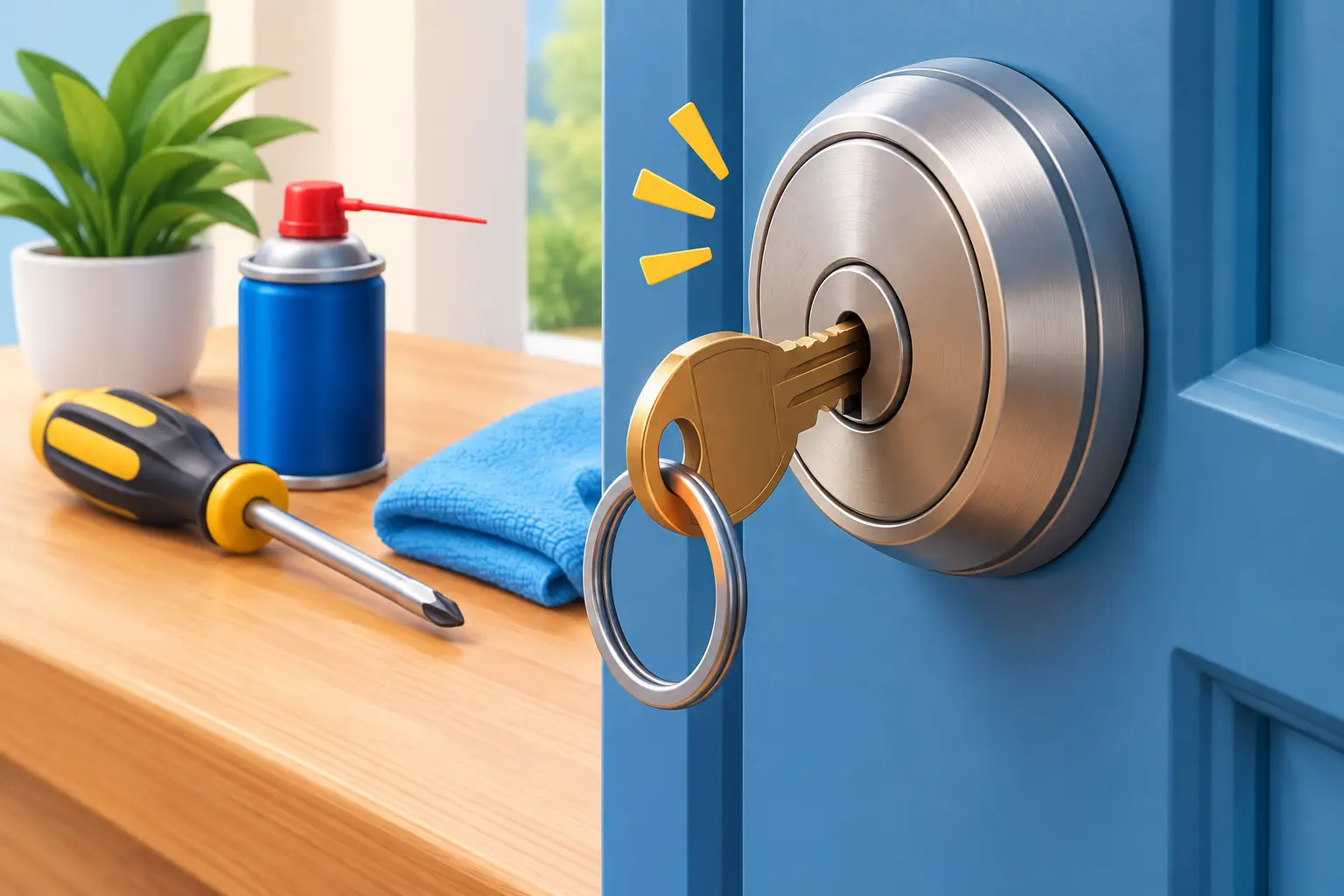
If you have an appropriate dry lubricant designed for locks, a small amount may help with a dry or dirty cylinder. Give it a moment to work, then try the key once more without forcing it. Avoid cooking oil, grease and general-purpose penetrating sprays unless they are specifically suitable for lock cylinders. They can leave residue and make a short-term problem worse.
If the key starts to bend, feels as though it may snap, or will not come out, stop. A broken key extraction is usually more involved than dealing with a sticking lock early.
When a Locksmith Is the Right Call
Call a professional promptly if the key is stuck, the lock will not secure, the key turns but the door will not open, or you are locked out. The same applies when a lock is sticking on a fire exit, business entry, rental property or any door that affects safety and access.
A fully licensed locksmith can identify whether the fault sits with the key, cylinder, latch, strike plate, door alignment or the broader locking system. That assessment matters because replacing a cylinder will not fix a sagging door, while adjusting a door will not repair worn pins inside a damaged lock.
For Canberra homes, businesses and vehicles, Night & Day Locksmiths provides mobile assistance when lock trouble cannot wait. Acting before the key breaks can often preserve more of the existing hardware and get you back to normal sooner.
Preventing Sticky Locks Before They Become Lockouts
A little maintenance goes a long way. Keep external locks protected from unnecessary dirt and water where possible, use a suitable dry lubricant occasionally, and replace keys that show visible wear. If a key starts needing a specific jiggle or angle, treat that as an early warning rather than a new routine.
For doors that need to be pushed or lifted to lock, arrange an adjustment before the lock is placed under constant strain. Property managers and business owners should pay particular attention to high-traffic doors, restricted-key systems and access points used by multiple staff or tenants.
Keep a quality spare key in a sensible, secure location or with a trusted person. Do not hide one in an obvious spot outside the property. If keys have been lost, not returned after a tenancy, or are circulating among former staff, rekeying can restore control without necessarily replacing every lock.
A sticking key is often the first sign that a lock needs attention. Deal with it while the door can still be opened and secured normally, and you are far less likely to face a broken key at the worst possible time.