A locked front door to a small office, a busy strata entry and a warehouse fire exit may all use electronic access control, but they do not need the same locking hardware. When weighing up electric strikes versus maglocks, the right choice comes down to the door, the way people use it, what happens during a power outage and the building’s fire and emergency requirements.
Both options can work with keypads, swipe cards, fobs, intercoms and app-based access systems. The practical difference is where and how they hold the door closed. Getting that detail right prevents unreliable access, frustrated staff and a security upgrade that costs more to correct later.
How an electric strike works
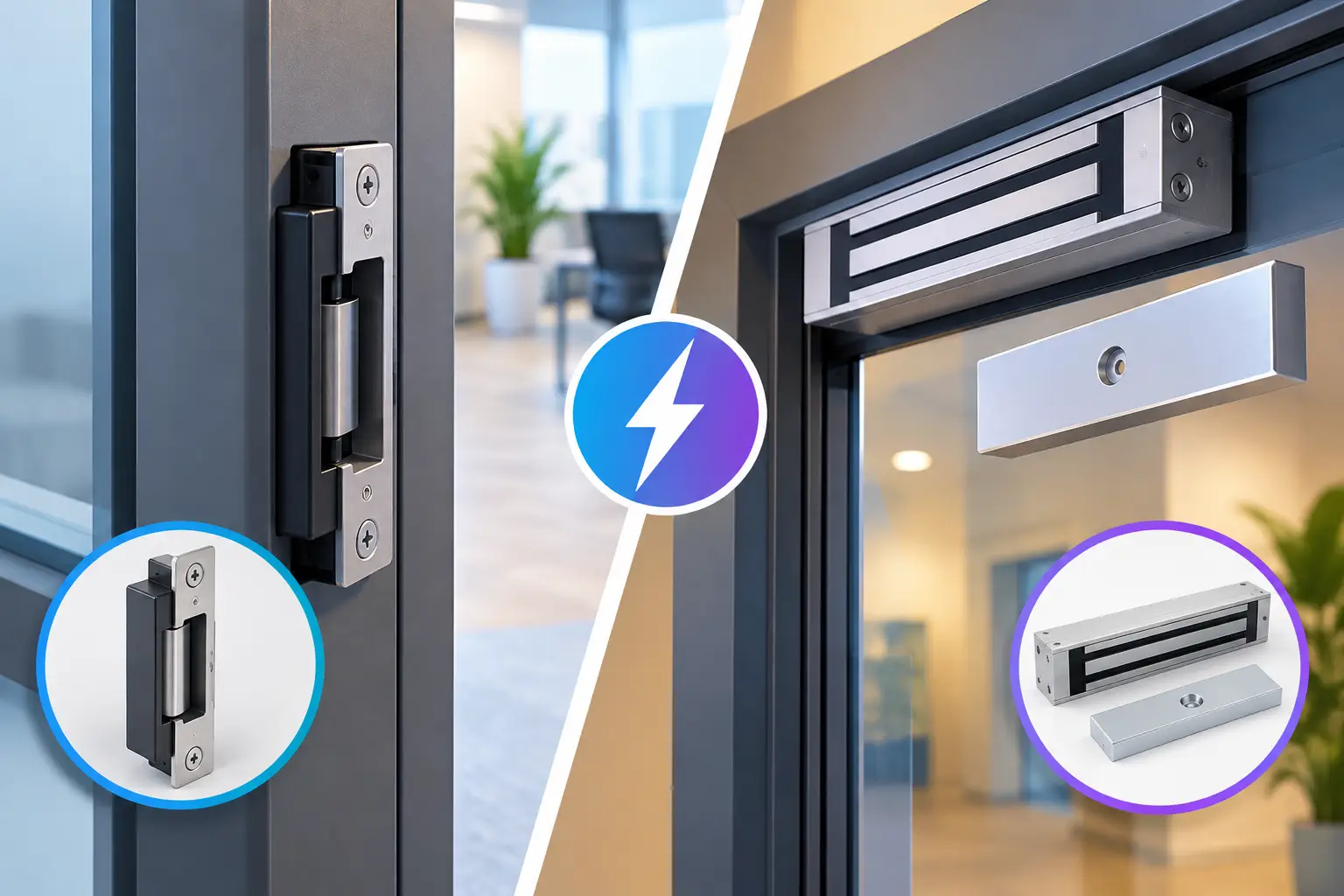
An electric strike replaces or works with the strike plate in the door frame. Rather than physically moving the latch in the lock, it releases the keeper around the latch when authorised access is granted. The door can then be opened by pulling or pushing it, depending on the setup.
Electric strikes are commonly fitted to hinged doors with a mechanical lockset or mortice lock already in place. From the outside, users can enter with an access card, keypad code or intercom release. From the inside, the door can usually operate normally with its lever, handle or exit device.
This makes an electric strike a strong option where a building wants electronic control without changing the familiar operation of the door. A professional office, medical practice or apartment entry may benefit from that balance. The door still latches mechanically when it closes, so it remains secure even if someone forgets to present a card after entering.
Electric strikes can be configured as fail secure or fail safe. A fail-secure strike stays locked when power is lost and requires a key or another approved mechanical method to enter. A fail-safe strike releases when power fails. The correct arrangement depends on the opening’s purpose and applicable fire, life-safety and access requirements.
How a maglock works
A magnetic lock, usually called a maglock, uses an electromagnet mounted to the frame and an armature plate fitted to the door. When power is supplied, the magnet holds the armature firmly against it. When authorised access is granted, power to the lock is cut and the door can be opened.
Maglocks are often chosen for doors where fitting an electric strike is difficult or where a powerful holding force is needed. They are common on glass doors, aluminium-framed entry doors and some commercial access-control installations. Because the lock is mounted on the surface, a maglock can sometimes be installed with less alteration to the frame than an electric strike.
The key limitation is that a maglock only holds while it has power. It is inherently fail safe: when power is removed, it releases. For that reason, it needs careful planning around backup power, emergency release controls, fire systems and exit paths. A maglock is not simply a bigger electronic lock. It is part of a broader door and life-safety system.
Electric strikes versus maglocks: the key differences
For many commercial premises, the decision starts with the existing door hardware. If the door already has a suitable latch and lock, an electric strike may be the cleaner and more natural solution. It preserves mechanical latching and can retain key override for after-hours access.
A maglock may suit a door that lacks a compatible latch, particularly certain glazed doors. It can also provide substantial holding force, but force alone does not equal better security. The frame strength, door condition, hinges, closer, access credentials and installation quality all affect how secure the opening is in daily use.
Power failure behaviour is another major difference. A properly selected fail-secure electric strike can remain locked during a loss of power, while a maglock releases unless supported by an appropriately designed backup supply. That may be a benefit for safe egress, but it can leave a building unsecured during an outage if the full system has not been planned correctly.
There is also the user experience. Electric strikes generally allow a door to close and relatch in the normal way. Maglocks rely on the door closing fully so the armature meets the magnet. A poorly adjusted door closer, warped door or misaligned frame can cause intermittent locking. This is especially relevant on high-traffic doors exposed to wind, heavy use or temperature changes.
Fire safety and emergency exit requirements come first
Electronic locking should never make it harder for people to leave safely in an emergency. This is particularly important for shared buildings, workplaces, childcare settings, medical facilities, warehouses and public-facing premises.
A maglock installation may require a compliant emergency break-glass release, suitable exit controls, fire alarm interface and clearly considered power arrangements. Depending on the door and building use, the system may also need to release automatically when the fire system activates. These details must be assessed for the specific site rather than copied from another building.
Electric strikes also need correct selection and installation. An entry door, a fire-rated door and a designated escape door are not interchangeable applications. Hardware must be compatible with the door, latch and existing exit hardware, and any fire-rating requirements must be maintained.
If you manage a strata property or commercial building in Canberra, involve a qualified locksmith and the relevant building or fire professionals before committing to hardware. The aim is not just to make access convenient. It is to create a door that is secure, reliable and safe for everyone who uses it.
Which option suits common property types?
For a standard office entry with a solid door and existing latch, an electric strike is often the practical choice. It lets staff use cards or a keypad while retaining a familiar internal handle and a mechanical key option. It can be ideal where the door needs to remain secure after hours, even during a power failure.
For a glass or aluminium shopfront door, a maglock may be more suitable when the door and frame cannot readily accept an electric strike. The installation still needs proper release controls, cable protection and a closer that brings the door shut every time.
For apartment buildings and strata common areas, either option can be appropriate. The important questions are who needs access, whether visitors use an intercom, how emergency egress works and who is responsible for ongoing maintenance. A door that is secure one week but sticks open the next is not an effective access-control solution.
For warehouses and restricted staff areas, the best answer often depends on the door type and traffic volume. A heavy fire door with panic hardware needs a different approach from a lightweight internal storeroom door. In higher-risk areas, restricted keys, audit-capable credentials and door monitoring may matter as much as the lock itself.
Plan for the whole access-control system
Choosing between electric strikes and maglocks is only one part of the job. The access method, cabling, power supply, battery backup, door closer, request-to-exit device and emergency release arrangement all need to work together.
It is also worth thinking about what happens when something goes wrong. Can authorised staff enter if a credential system fails? Will the door report that it has been forced open or left ajar? Is there a safe way to lock down the entry without trapping people inside? These are practical questions that affect a property long after installation day.
Maintenance should be part of the plan. Door alignment, loose hinges, worn closers and damaged cabling can all cause faults that appear to be an electronic lock problem. Regular inspection keeps the opening operating as intended and can identify issues before they become an after-hours security callout.
A properly assessed electronic lock gives people simple access while keeping control where it belongs. Whether an electric strike or maglock is the better fit, choose hardware that suits the door, supports safe exit and will keep working when your property is under real day-to-day pressure.