A garage is often the largest moving entry point in a home, yet it can receive less attention than the front door. Good top garage door security protects more than tools, bikes and stored belongings. If your garage connects to the house, it also helps protect the internal door, family spaces and the keys often left within easy reach.
The right approach depends on the door you have, how you use the garage and whether it is attached to the home. A basic lock may be enough for a detached storage garage with no valuables. An attached garage, a workshop or a property storing e-bikes, tools or a vehicle calls for stronger layers of protection.
Start with the garage door itself
A secure garage door needs to close fully, sit squarely in its tracks and resist being lifted or forced open. Security hardware cannot make up for a damaged door, worn rollers or a poorly aligned locking point. If the door rattles, leaves visible gaps, can be lifted after it is shut or does not latch reliably, arrange a repair before adding further security.
For manual roller doors, a properly fitted garage door lock is usually the first upgrade to consider. Quality roller door locks secure the door to the guides or floor and should be installed so they cannot be easily reached or manipulated from outside. Avoid relying on a lightweight padlock through a loose fitting or improvised chain. These arrangements can be vulnerable and may also interfere with the door’s normal operation.
Sectional doors use a different mechanism and often rely on the automatic opener to hold the door closed. Where extra protection is needed, suitable side locks or purpose-designed locking systems may be an option. The best choice comes down to the door’s construction and the clearance around it. Forcing a generic lock onto the wrong door can damage panels, tracks or the opener.
Do not overlook side and rear access
Many garage break-ins do not involve defeating the main garage door. A timber side door with an old knob lock, a loose rear gate or an unsecured window can be the easier route in.
Treat every access point as part of the same security plan. A solid external door, quality deadlock or suitable restricted key system, secure hinges and adequate lighting can make a major difference. Windows should not allow a person to reach the internal release cord or door controls. Frosted film, window locks or relocating stored items may help, depending on the layout.
Protect the automatic opener
Automatic doors offer convenience, but the remote control and emergency release need sensible protection. The simplest habit is also one of the most effective: never leave a garage remote visible in an unlocked car, particularly when that car is parked in the driveway. A remote paired with identification showing your address gives an offender a direct invitation.
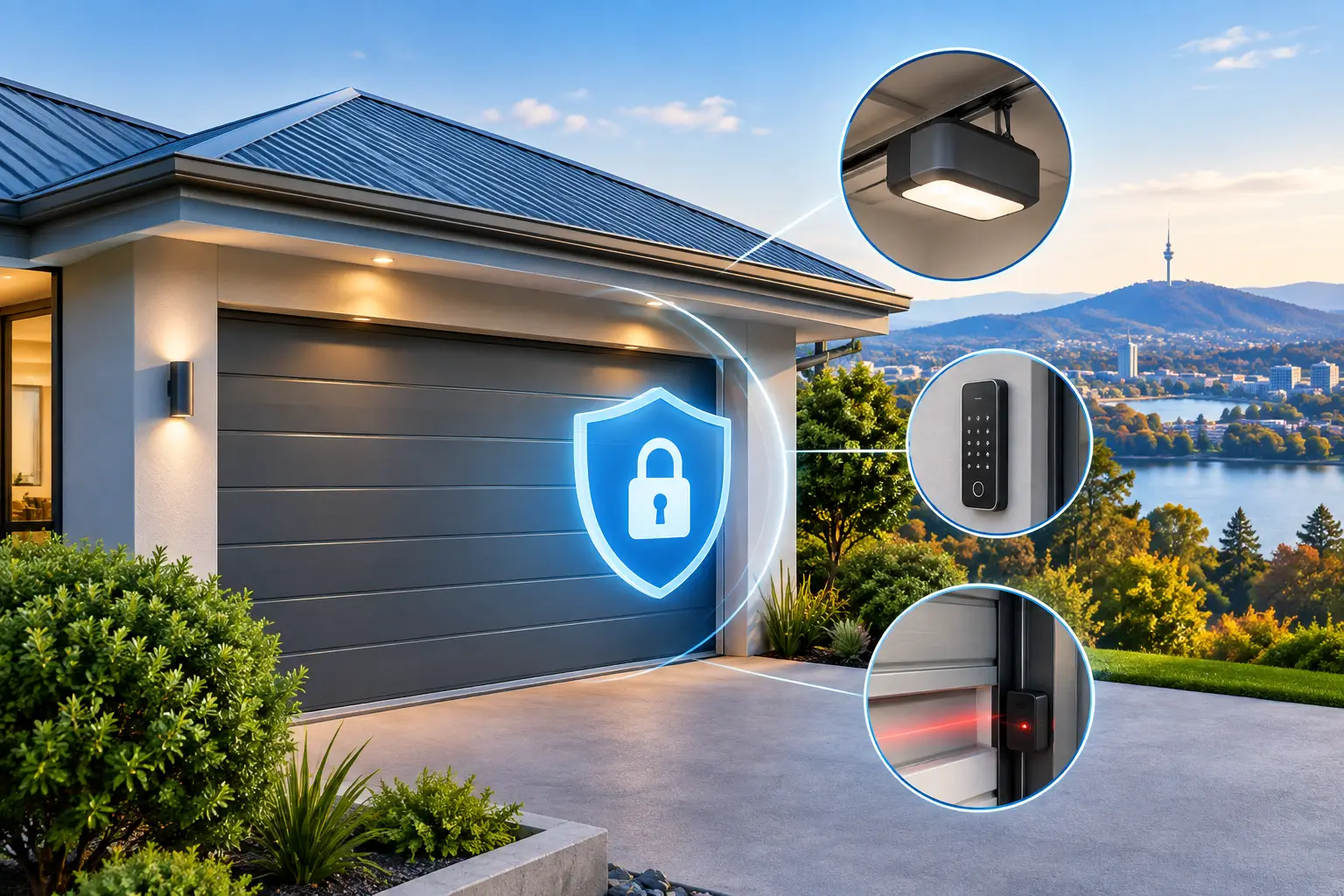
Consider a keyring remote that stays with you, or use a compatible keypad or mobile control system with secure access settings. If several people need access, choose a system that lets you remove a user’s access when circumstances change. This is useful for tenants, tradespeople, cleaners, staff or family members who no longer need entry.
The emergency release is essential for safety when power fails or the opener stops working. It should not simply be removed or permanently tied up. However, it should be protected from simple external fishing methods where the door design leaves it exposed. A locksmith or qualified garage door technician can advise on a safe solution that preserves emergency access from inside the garage.
If you move into a property with an existing automatic opener, reset its codes and remove old remotes from the system. The same applies after a lost remote, a relationship breakdown, a tenancy change or a break-in. Reprogramming access is often faster and more affordable than dealing with the consequences of an unknown remote still working.
Top garage door security uses layers, not one lock
The strongest security arrangements make an intruder work through several obstacles. A visible camera may deter opportunistic behaviour, but it should not be the only measure. A strong lock is valuable, but it is less useful if a side window gives easy access to the opener. Combine physical security, access control and everyday habits.
For most homes, four practical layers work well:
- a garage door that closes, latches and locks correctly
- protected remotes and regularly updated opener access
- secure side doors, windows and the internal door to the house
- lighting, alarms or cameras that make suspicious activity easier to detect
Motion-sensor lighting is especially useful around driveways, side passages and rear garage doors. It improves visibility when arriving home at night and can discourage someone from lingering out of sight. Cameras can add reassurance and useful evidence, but position them to capture faces and entry points rather than only the top of a driveway.
An alarm sensor on the garage door or inside the garage can be worthwhile where high-value tools, sporting equipment or stock are kept. For business premises, warehouses and strata garages, access control, restricted keys and an audited key system may be more appropriate than relying on shared remotes.
Secure what is inside the garage
Even a well-secured garage can be targeted if valuable items are clearly visible through windows or when the door is open. Keep tools, power equipment and bicycles out of immediate sight. Lock bikes to a fixed anchor rather than relying on the garage door alone. Store vehicle keys away from the garage entry and never leave spare house keys in an obvious drawer, cabinet or wall hook.
For homeowners with an internal access door, this door should be treated much like an external entry door. It needs a reliable lock, solid frame and hardware suited to how the household uses it. Some families prefer it to lock automatically when closed; others need a different arrangement for fire safety or daily access. The right option should support safe exit while preventing easy entry from the garage.
If you use the garage as a workshop, avoid advertising the contents. Leaving the door open while working is normal, but take care when stepping inside for a mobile call or leaving the property briefly. It takes very little time for portable tools to disappear from an open garage.
Common gaps that are easy to fix
Garage security is often weakened by small oversights rather than one dramatic failure. Check that the door closes every time, including when operated by remote from the street. Make sure the internal door is not routinely left unlocked overnight. Review who has remotes, codes and spare keys, then collect or delete access that is no longer required.
Also inspect the perimeter. Overgrown shrubs can provide cover near a side door, while an unsecured ladder can help someone reach a window or roofline. Keep packaging for expensive purchases out of view and avoid posting holiday plans publicly while the home is vacant.
Renters should not make permanent changes to garage locks or openers without the owner or property manager’s approval. Still, reporting a faulty lock, damaged side door or unreliable opener promptly is reasonable and worthwhile. Property managers can reduce repeated issues by keeping clear records of issued remotes and changing access after tenants leave.
When to call a locksmith
A locksmith can assess whether the weakness is the lock, the door hardware, the internal access point or the way keys and remotes are managed. This is particularly useful after a break-in attempt, lost keys or remotes, moving into a new property, or when a garage forms part of a commercial or strata site.
For Canberra homes and businesses, Night & Day Locksmiths can help identify practical upgrades that suit the existing door and the level of risk. A properly selected, professionally fitted solution is safer than a quick fix that affects the door’s operation or leaves a new weak point.
Tonight, take one minute to check whether your garage door is fully closed, your remote is out of sight and the door into your home is secure. Those small checks are often where better security starts.