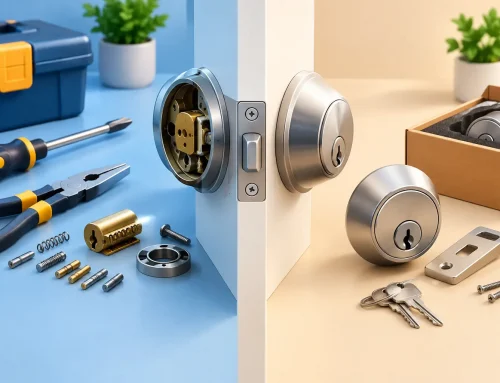
A missing key is not always an emergency. A key that may have been copied, passed between staff, or left with a former tenant is a different problem entirely. This restricted key management guide explains how to keep control of who can enter your home, workplace or managed property – without making daily access difficult for the people who genuinely need it.
Restricted key systems are especially useful where several people need access over time: rental homes, strata buildings, offices, clinics, workshops, warehouses and community facilities. The aim is simple. You should know which keys exist, who holds them and who has authority to order another one.
What makes a key restricted?
A restricted key is supplied under a controlled system. Unlike a standard house key that may be copied at many key-cutting outlets, a restricted key can only be duplicated by authorised locksmiths and approved people listed against the system. The design of the key and the supplier’s controls work together to limit unauthorised copies.
That does not mean a restricted key makes a property invulnerable. A lost key can still be used until access is changed, and doors, frames and locking hardware still need to be in good condition. What it does provide is accountability. Instead of discovering years later that unknown copies are in circulation, you have a clear process for issuing and replacing keys.
The level of restriction depends on the product. Some systems rely on a registered signature, authorisation card or nominated contact. Others use patented keyways with tighter duplication controls for a defined period. A licensed locksmith can explain what applies to the particular system being installed, rather than promising that every restricted key offers the same protection.
Restricted key management guide for everyday control
A good system is not complicated. It is a set of rules people can follow when they are busy, when a staff member leaves unexpectedly, or when a tenant changes over on a Friday afternoon.
Set one person or role as the authority
Nominate a key controller before keys are issued. For a household, that may be an owner. For a business, it may be a facilities manager, office manager or director. For strata and real estate portfolios, authority may sit with the property manager and a backup contact.
The locksmith should have current written instructions on who can approve copies. Review this whenever people change roles. If an old employee remains on the authorisation list, the restricted system is only partly doing its job.
Avoid giving general approval to several people just because it feels convenient. A backup contact is sensible, particularly for after-hours incidents, but too many approvers make it harder to verify requests and trace decisions later.
Keep a key register that people will actually use
Your register does not need to be elaborate. It can be a secure digital record or a locked paper file, provided it is kept up to date. Record the key number or identifier, the door or area it opens, the holder’s name, the date issued and the date returned. Include the reason for issue where that is useful, such as contractor access or temporary tenancy.
Do not label a key ring with the property address, unit number or business name. If the keys are lost, that label gives a stranger a head start. Use a code in the register instead, and keep the register separate from the keys.
For commercial sites, distinguish between keys issued to individuals and keys stored for emergencies. An emergency key cabinet may be necessary, but it should be positioned, controlled and recorded like any other access point.
Issue access for the job, not for convenience
Not every person needs a master key. A cleaner might need access to common areas and selected offices, while a maintenance contractor may need a plant room and exterior gate only. Giving each person the minimum access needed reduces the impact of a lost key and makes the system easier to manage.
This is where a master key system can help. It allows one authorised keyholder to access several doors while individual keys only open their allocated areas. The trade-off is that a master key carries greater risk if it is lost. Treat it accordingly: limit the number in circulation, record each one and have a clear response plan.
For a small home, a full master key system may be unnecessary. A restricted front-door key with controlled copies may be the better balance of cost and protection. For a multi-site business or large strata property, a properly planned hierarchy is usually worth the extra design work.
Make returns part of every exit process
Keys should be returned on a person’s final day, not when someone remembers next month. Include key return in offboarding for employees, contractors, tenants and managing agents. Check the physical keys against the register, then remove the former holder’s access from any electronic system at the same time.
If a key cannot be returned, assess what it opened and how easily the property can be identified. A missing key to a locked internal store room is different from an unreturned master key marked with a company tag. In higher-risk cases, rekeying the affected cylinders is usually the sensible response.
Choose the right restricted key setup
Start with the doors that matter most: external entry doors, gates, shared building entrances, server rooms, stock areas, medication storage and keysafes. There is little value installing a restricted cylinder on the front door while a side gate or rear entry has a weak lock or uncontrolled key.
Your locksmith should inspect the existing doors and hardware, then recommend a system that suits the property, expected number of users and likely changes over time. Ask how copies are authorised, how long replacement keys normally take, whether the system can expand later, and what happens if the nominated authoriser is unavailable.
Think about emergencies too. If your manager is interstate and the only master key is locked in their desk, access becomes a costly problem. A controlled spare key arrangement, held by a trusted local contact or stored in a suitable secure cabinet, can prevent that situation without handing out unnecessary copies.
For some businesses, electronic access control is a better fit for high-turnover staff areas. Cards, fobs and mobile credentials can often be removed quickly when someone leaves. Physical restricted keys still have a strong role for perimeter doors, plant rooms, homes, sites with limited power or connectivity, and any area where dependable mechanical access is preferred.
What to do when a restricted key is lost
Act early rather than waiting to see whether the key turns up. First, identify the key from the register and confirm what it opens. Next, establish whether it had an address, logo, access tag or other information linking it to the property. Then contact your locksmith for advice on whether rekeying, replacing a cylinder or changing part of the master system is appropriate.
If there is a chance the key was stolen or deliberately retained, do not discuss key numbers or system details widely. Keep the response limited to the people who need to act. Update the register once the issue is resolved so the same uncertainty does not return later.
A restricted key system pays off when it is managed consistently, not just installed and forgotten. Clear authority, a current register and prompt action when people or keys change hands are the habits that protect your property. For Canberra properties that need practical advice or a controlled key system fitted, Night & Day Locksmiths can assess the doors you have and help set up a process your team can maintain.