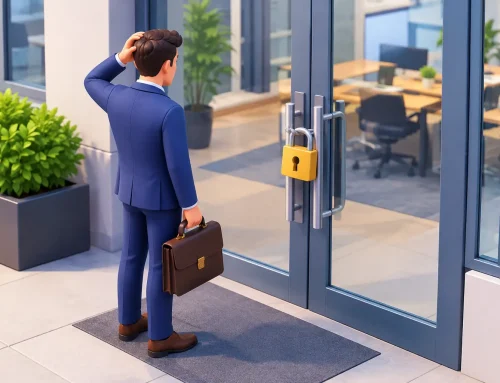
A locked office door at 8.00 am can hold up an entire team. Staff may be waiting outside, clients may be due shortly, and the person with the only spare key may be on leave. Preventing office lockouts is not just about avoiding an inconvenient callout. It is about protecting trading hours, staff safety and your building’s security.
Most office lockouts are preventable. They tend to come from simple gaps: an employee leaves with the wrong key, a keyholder changes roles without handing keys back, a battery fails in an electronic lock, or a door is set to lock automatically without a clear after-hours procedure. A sensible plan addresses those everyday issues before they become an urgent problem.
Start with clear key control
Keys are easy to copy, misplace and pass around without anyone noticing. That is why the first step in preventing office lockouts is knowing exactly who has access and why.
Keep a current key register that records every key issued, the person responsible for it, which doors it opens and the date it was returned. This does not need to be complicated, but it must be maintained. A key register that has not been updated since the last staff change is little help when someone cannot get into the office.
Avoid relying on one person to hold every spare. A business owner, office manager and trusted senior staff member may each need authorised access, depending on the size of the workplace and the hours you operate. The aim is accountability without creating a single point of failure.
Where physical keys are needed, store labelled spares in a secure key cabinet rather than in a desk drawer, planter box or taped beneath a reception counter. Hiding a key outside may appear convenient, but it can create a much larger security issue than a lockout.
Review keys when staff or tenants change
Employee departures, contractor changes and commercial tenancy handovers are the moments when key control often breaks down. Collect all issued keys as part of an exit process, including alarm keys, storeroom keys, mailbox keys and keys held for after-hours access.
If keys cannot be accounted for, consider rekeying the affected locks. Rekeying changes the lock’s working key without necessarily replacing the full lock hardware. It is often a practical option after staff turnover or a tenancy change, particularly when the number of copied keys is unknown.
For offices with several doors, a restricted key system offers more control. Restricted keys are harder to duplicate without authority, which helps prevent unauthorised copies from circulating long after a staff member or contractor has moved on.
Give staff a simple lockout procedure
People make rushed decisions when they are late, tired or dealing with an after-hours issue. A short, written procedure takes the guesswork out of what to do if they are locked out.
Staff should know who to contact first, where authorised spare access is held, and whether they are permitted to call a locksmith. They should also know what not to do. Forcing a door, levering a latch or trying to climb through another entry can damage the door, lock or frame, and may create a safety risk or insurance concern.
For many workplaces, the procedure should cover these four points:
- the nominated keyholders and their contact details
- the approved locksmith or property manager contact
- the process for verifying that the caller is authorised to enter
- what to do if a lockout happens outside normal business hours
Keep this information in a place staff can access without being inside the office. A secure staff portal, a controlled emergency contact card or an approved mobile contact list can work well. Do not post alarm codes or detailed access instructions on an external noticeboard.
The procedure should also distinguish between an inconvenience and an emergency. A staff member locked out of a meeting room can usually wait for a keyholder. A sole worker locked outside at night, an office containing essential records, or a failed lock that leaves premises unsecured needs faster action.
Choose access systems that suit the workplace
Traditional keys remain reliable and cost-effective for many small offices. They require no batteries, no apps and very little staff training. The trade-off is that lost keys can be difficult to trace, and every copied key weakens your control over access.
Electronic access systems can reduce those risks. Keypads, swipe cards, fobs and mobile credentials make it easier to remove access when a staff member leaves. They can also be useful where different teams need access at different times, such as a shared office, warehouse or professional practice.
However, electronic access is not automatically the right answer. A keypad code shared too widely is no better than an unmanaged key. Fobs still need to be issued and cancelled properly. Battery-operated devices need a maintenance schedule, and every electronic system needs a backup method for power failures, flat batteries or software faults.
For larger premises, a master key system can offer a good middle ground. Individual staff may carry a key for their own office or area, while authorised managers hold a key that opens selected doors across the site. A properly designed system reduces bulky key rings and makes emergency access easier, but it needs careful planning so access levels remain appropriate.
Do not overlook the door itself
A lock can be working perfectly while the door creates the problem. Misaligned doors, worn closers, damaged frames and swelling caused by weather can make a key hard to turn or stop a latch from releasing properly. Staff may assume the key is wrong and apply force, only to break a key in the cylinder.
Arrange repairs when a door starts sticking, scraping or failing to close cleanly. Also check that fire and emergency exit doors meet their required egress obligations. Security should never prevent people from leaving safely in an emergency.
Plan for after-hours access without weakening security
The last person leaving often carries the greatest responsibility. They may arm the alarm, check doors and set the building for the night, yet they may also be the person most likely to realise their keys are still on the desk after the door has locked behind them.
Set clear closing responsibilities and avoid changing them informally from one week to the next. If staff rotate closing duties, make sure each person has been shown how the locks, alarm and access system work. A quick handover is particularly important before holiday periods, when usual keyholders may be away.
It is also worth checking the lease and building rules. Some commercial buildings have concierge staff, loading dock restrictions, common-area access arrangements or requirements to use particular locksmiths. Knowing this before a late-night lockout saves time when every minute matters.
Keep an authorised emergency contact list current with the property manager, monitoring provider and locksmith. If your business operates from Canberra premises, choosing a local, fully licenced locksmith with genuine 24/7 availability means there is a clear next step if your preventative measures are not enough.
Test the plan before it is needed
A lockout plan is only useful if it works in real conditions. Every few months, review the key register, confirm the listed keyholders still have their keys, and test any electronic access backups. Check that emergency numbers are current and that a manager can explain the after-hours process without searching through old emails.
This review is also a good opportunity to look for recurring warning signs. Are keys regularly being borrowed? Has the same door needed repeated adjustment? Are staff writing down keypad codes near the entrance? Small habits can point to a larger gap in your access arrangements.
Night & Day Locksmiths can help Canberra businesses assess key control, rekey locks, set up restricted keys or design access arrangements that match how the workplace actually operates. The best solution depends on the number of doors, staff turnover, operating hours and the level of security required.
A well-run office does not need to assume a lockout will never happen. It simply makes sure that one misplaced key or faulty lock does not stop the day before it has properly begun.