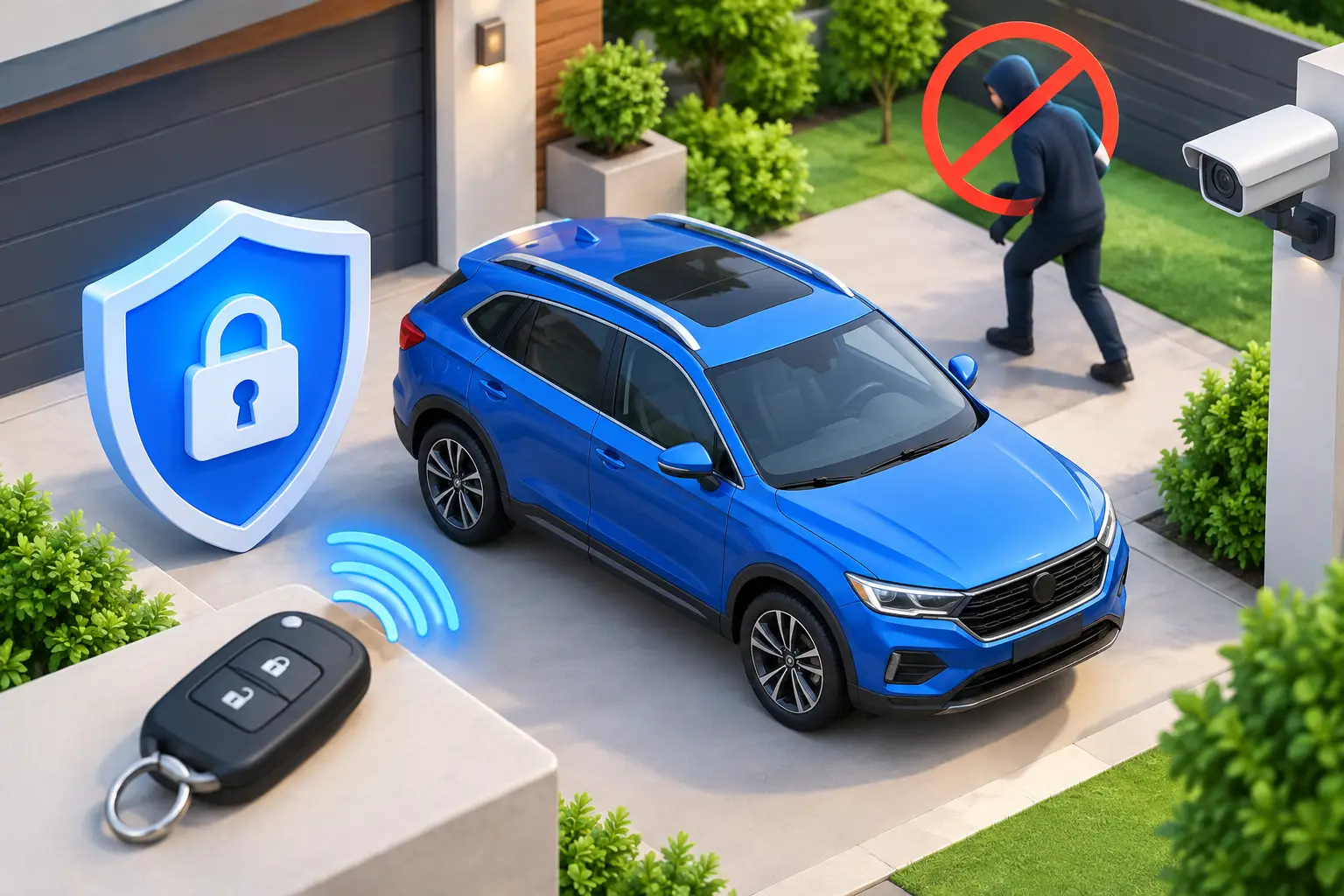
A stolen vehicle is more than an insurance claim. It can leave you stranded at work, unable to collect the kids, without tools needed for a job, or facing the disruption of replacing keys and personal belongings. Effective vehicle theft prevention comes down to making your car or ute a less appealing target and making it harder to take when an opportunistic thief is nearby.
Most thefts rely on speed, poor visibility and an easy mistake: an unlocked door, a key left within reach, valuables on show, or a vehicle left running for just a moment. A few sensible habits, supported by the right security equipment, can significantly reduce your risk.
Start with the habits thieves look for
The simplest security measures are often the ones that matter most. Each time you park, lock the vehicle using the remote or key, then check that the doors have actually locked. Do not assume a press of the button has worked, particularly if you are standing some distance away or the key battery is weak.
Close every window fully and do not leave a spare key hidden in the vehicle. The old ideas of under the wheel arch, behind the number plate or in the magnetic box beneath the car are well known. They are convenient until someone else finds them.
Never leave your car unattended with the engine running, even outside your home, at a servo or while you duck into a shop. It only takes seconds. If you use remote start, make sure the vehicle remains locked and cannot be driven without the proper key.
Your keys need protection too. Keep them away from external doors and windows at home, where they may be visible or within reach through a broken window. For vehicles with keyless entry, storing keys in a signal-blocking pouch or container can help reduce the risk of relay theft. This is where criminals use equipment to capture and extend the signal from a key inside the house to the vehicle outside.
Choose parking that works in your favour
Where you leave your vehicle changes the opportunity available to a thief. At home, a locked garage is ideal. If that is not available, park in a well-lit area close to the house, preferably where the vehicle can be seen from inside. Motion-sensor lighting, visible cameras and a secure driveway gate can all add useful deterrence.
When parking away from home, choose busy, well-lit locations with pedestrian activity and passive surveillance. Secure car parks are generally preferable to isolated streets or quiet corners. If you drive a ute or work vehicle, think carefully about where it sits overnight. Tools, ladders and equipment can attract thieves even when the vehicle itself is difficult to steal.
Do not leave bags, wallets, laptops or shopping visible on seats. A thief may smash a window for an item worth far less than the damage caused. Put belongings in the boot before reaching your destination where possible. Moving valuables into the boot after parking can signal to someone watching exactly where they have been stored.
Vehicle theft prevention needs layers, not one gadget
A factory alarm, immobiliser or central locking system is helpful, but no single product is a complete answer. Good vehicle theft prevention uses several barriers. The goal is to increase the effort, noise and time needed to steal the vehicle.
A visible steering wheel lock is a worthwhile physical deterrent, especially for older cars and vehicles parked on the street. It is not indestructible, but it makes the theft more difficult and tells an opportunistic thief to look elsewhere. A pedal lock or wheel clamp may suit a vehicle that is left for extended periods, although these options are less convenient for everyday use.
An aftermarket alarm can provide an extra warning if it is properly installed and matched to the vehicle. Look for an alarm with a clearly audible siren, tamper detection and quality installation rather than choosing on price alone. Poorly fitted electrical accessories can create reliability issues, so this is a job for a qualified professional.
A tracking device cannot stop a theft, but it may improve the chances of recovery and help provide accurate information to police and your insurer. It can be particularly useful for high-value vehicles, work utes, vans carrying stock or vehicles that travel across Canberra and beyond. Consider ongoing subscription costs, battery maintenance and whether the system provides real-time alerts before deciding.
For many owners, the best combination is straightforward: secure parking, consistent locking habits, a visible physical deterrent and an alarm or tracker suited to the vehicle’s value and use.
Protect work vehicles and utes differently
A work vehicle can be targeted for its contents as much as the vehicle itself. Tradespeople and business owners should treat the rear canopy, toolboxes and roof racks as separate security concerns.
Upgrade standard toolbox locks if they are light-duty or use common keys. Locks should be difficult to pry open and ideally use restricted or controlled keys that cannot be copied casually. Secure high-value tools inside the vehicle rather than relying on a canopy alone, and remove portable equipment overnight when practical.
Mark tools with identifying details and keep an updated record of serial numbers, receipts and photographs. This will not prevent theft, but it can support police reports and insurance claims and make recovered property easier to identify. Signage indicating that tools are removed overnight can also discourage a break-in, provided it is true.
If several staff use company vehicles, set clear rules for key custody. Keys should not be left in a shared tray, in an unlocked site office or in vehicle consoles. A controlled key system and documented handover process are sensible for businesses with multiple vehicles or valuable equipment.
Be alert to key and ignition warning signs
A worn key, damaged remote or stiff ignition may seem like a minor annoyance, but ignoring it can create a security and access problem at the worst possible time. If a key is cracked, bent or intermittently fails to operate the lock, arrange a replacement before it breaks completely.
Modern transponder keys and proximity fobs need to be correctly programmed to the vehicle. If a key has been lost or stolen, simply cutting another key is not always enough. Depending on the make and model, the lost key may need to be removed from the vehicle’s memory so it can no longer start the car.
The same principle applies when buying a used vehicle. Confirm how many keys exist and whether all remotes have been handed over. If there is any doubt about who may still hold a working key, speak with an automotive locksmith about reprogramming options. It is a sensible precaution that can prevent an expensive surprise later.
What to do if someone tries to steal your vehicle
If you find signs of attempted theft, such as damaged locks, a broken window, disturbed wiring or a missing key, do not drive away and hope for the best. Photograph the damage, report the incident to police and contact your insurer if required. Arrange for the vehicle’s locks, ignition or keys to be assessed promptly.
If keys have been stolen from your home, workplace or bag, act quickly. Move the vehicle to a secure location if possible and ask whether the key can be deleted from the vehicle’s system. For older vehicles without electronic key management, changing or rekeying the relevant locks may be the safer option.
A fully licensed automotive locksmith can help with replacement keys, transponder programming, ignition repairs and practical advice when a vehicle’s security has been compromised. Night & Day Locksmiths provides mobile automotive locksmith support across Canberra, including urgent key and ignition issues when you need clear help without delay.
A quick routine worth keeping
Before walking away, take a few seconds to lock the vehicle, check the doors, remove or hide valuables and make sure the keys are with you. At home, keep keys secure and park where lighting and visibility work in your favour. These small actions will not eliminate every risk, but they remove the easy opportunities thieves depend on.
The best time to improve vehicle security is before a lost key, break-in or theft forces the issue. Start with the weak point you can fix today, then build stronger protection around the way you actually use and park your vehicle.