A missing master key can stop a business day before it starts. Staff cannot open a storeroom, contractors are waiting at reception, or a tenant has access to an area they should not. Key cabinet systems give businesses a clear, secure place to store keys and a practical way to know who has taken them.
For offices, warehouses, strata sites, schools, medical practices and property managers, the right cabinet is not simply a wall-mounted box. It is part of the wider access plan. When it is matched to the building, the number of users and the sensitivity of each key, it reduces confusion and helps protect people, stock and premises.
What key cabinet systems are designed to solve
Keys tend to become a problem gradually. One spare is kept in a drawer, another is handed to a cleaner, and a master key is borrowed for a quick job but never returned to its labelled hook. Eventually, nobody is certain how many copies exist or who can enter restricted areas.
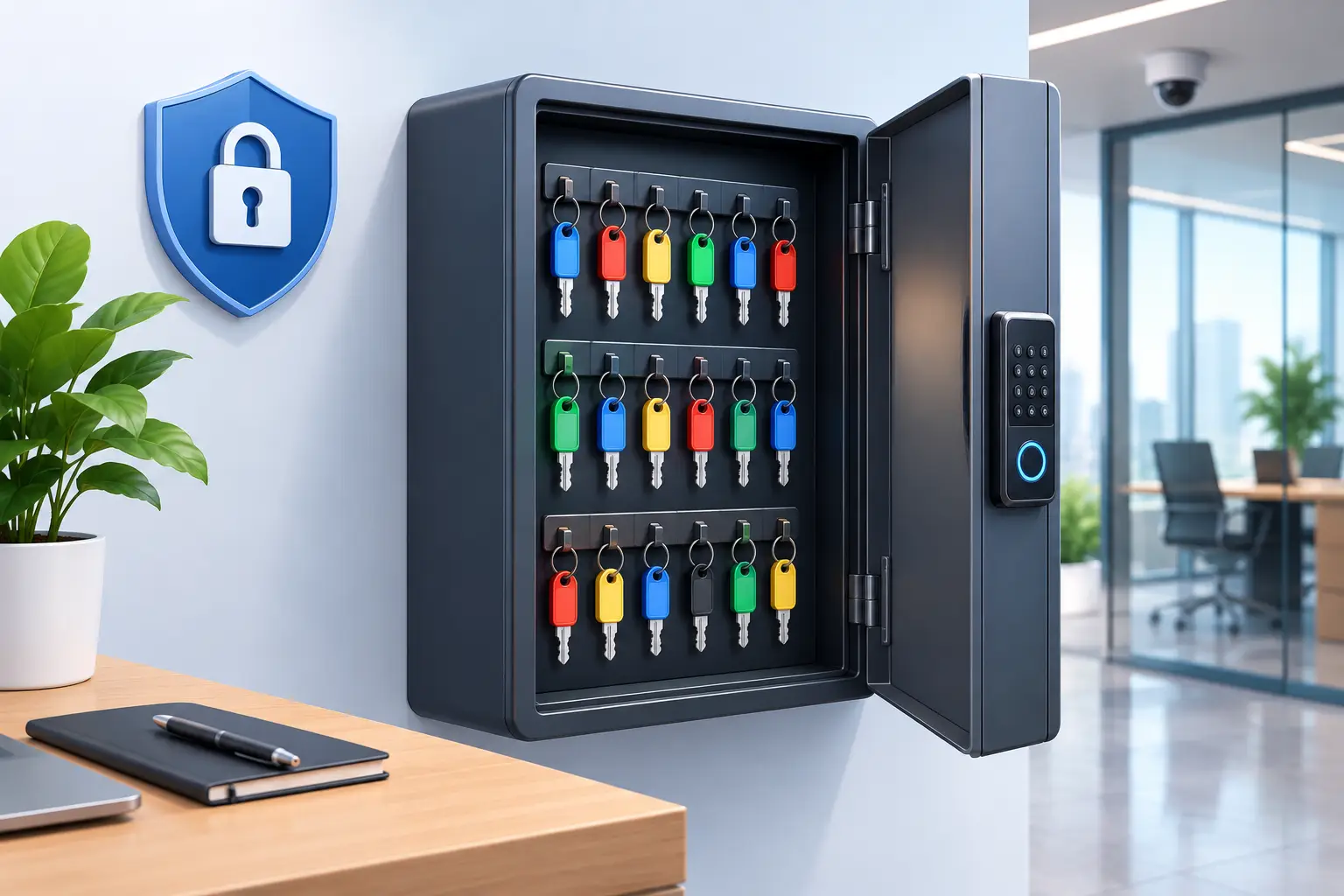
A key cabinet creates a single point of control. Keys are tagged, assigned a position and stored behind a lock. The person responsible for the site can see when a key is missing and follow up before a small oversight becomes a security incident.
This matters after staff turnover, a tenancy change, a break-in, or a lost set of keys. It also matters on ordinary busy days. A well-run system means authorised staff can get the key they need without searching through reception drawers or calling several people for help.
The cabinet itself is only one layer of security. If too many people know the cabinet code, or keys are labelled with the exact door and address they open, the system loses much of its value. Good key management combines secure storage, sensible permissions and clear procedures.
Choosing key cabinet systems for your site
The best option depends on how the keys are used. A small office with a handful of internal doors has different needs from a facilities team managing multiple buildings and contractors. Capacity is relevant, but it should not be the only consideration.
Mechanical cabinets for controlled, low-volume access
A mechanical key cabinet is a straightforward choice for sites where a small group of trusted people need occasional access. It may use a quality keyed lock or combination lock and has numbered hooks inside. These cabinets are reliable, simple to operate and do not rely on power or software.
They suit many smaller businesses, community facilities and residential complexes. The trade-off is accountability. Unless a register is maintained, the cabinet cannot automatically show who removed a particular key or when it was returned. For some sites, a sign-out book is enough. For higher-risk keys, it may not be.
Digital cabinets for stronger accountability
Electronic key cabinets use PIN codes, swipe cards, fobs or other credentials to control access. Depending on the model, they can record key withdrawals and returns, restrict access to particular users, and alert a manager when a key has been overdue for too long.
This is often a sensible option where keys are accessed across shifts, by a larger team or by contractors. A property manager looking after several sites, for example, may need a clear record of who had a master key and at what time. The additional cost can be justified by fewer lost keys, clearer responsibility and less disruption.
Electronic systems do need proper setup and ongoing administration. User access must be updated when employees leave or roles change. Someone should also be responsible for reviewing exceptions rather than assuming the audit trail will solve the problem by itself.
Capacity, construction and location matter
Choose a cabinet with spare capacity. A cabinet that is full on installation day leaves no room for new plant rooms, storage areas, vehicles or future tenants. It is generally wiser to allow for growth than to add an unsecured overflow key drawer six months later.
Construction should match the value of what the keys open. Look for a cabinet designed for secure wall mounting, with a solid body, protected hinges and a reliable locking mechanism. A key to a low-risk stationery cupboard does not need the same protection as a key to a server room, liquor storage area or building master system.
Location is equally important. Place the cabinet in an area that is supervised or access-controlled, rather than near a public entrance. Avoid installing it where visitors, delivery drivers or passers-by can observe staff entering codes. For some workplaces, the best location is a locked office or back-of-house area. For others, a reception point works if it is continuously attended.
Set up a system, not just a cabinet
A cabinet becomes useful when every key has a purpose, an owner and a record. Begin with a key audit. Identify every key currently in circulation, what it opens, who needs access and whether duplicate copies are genuinely required. This often reveals keys that should have been returned years ago.
Do not label tags with full addresses, unit numbers or detailed descriptions of sensitive areas. Use a reference number instead, with the matching information kept in a separate secure register. If a keyring is misplaced, it should not immediately tell a stranger where to use it.
For sites with several access levels, group keys logically. General maintenance keys, management keys and high-security keys should not all be available to the same people. A master key system can make access more convenient, but it also makes control more critical. The more doors one key opens, the more carefully it should be issued, stored and tracked.
A practical procedure should cover three points: who may take each key, how the key is signed out or recorded, and what happens if it is not returned. Keep the process simple enough that staff will follow it during a busy shift. If it takes ten minutes to borrow a cupboard key, people will find workarounds.
When a key cabinet should be paired with other security measures
Key storage is one part of a broader commercial security plan. If a key has been lost and it can be linked to your premises, changing or rekeying the affected locks may be the safer decision. Simply replacing the cabinet does not remove the risk created by an unaccounted-for key.
Restricted key systems can provide stronger control over copying, as authorised duplication is managed through approved channels. They are worth considering for offices, strata buildings, medical facilities, warehouses and other properties where uncontrolled copies could create an ongoing issue.
Some doors may also be better suited to electronic access control rather than physical keys. This can be particularly useful for staff-only areas with frequent personnel changes, because access can be removed without collecting a key. It does not mean every door needs to be electronic. Many sites use a sensible mix of mechanical locks, restricted keys, access control and a secure cabinet for the keys that remain.
Common mistakes that weaken key control
The most common issue is treating the cabinet code as shared workplace knowledge. If a code is known by former staff, contractors and casual workers, it is no longer meaningful access control. Change it when authorised personnel change, and limit it to people with a genuine need.
Another mistake is overlooking duplicate keys. A cabinet may be neatly organised, while spare copies sit in vehicles, toolboxes, drawers or personal bags. A key audit should account for these copies too. If there is uncertainty about who holds a key to a restricted area, rekeying may be less costly than carrying the risk.
Finally, do not wait for a theft or lockout to test the system. Review missing-key procedures, cabinet access and user permissions periodically. A few minutes of checking can prevent a much larger interruption when an urgent access issue arises.
For Canberra businesses and property managers, professional advice can help match the cabinet, locks and key hierarchy to the way the site actually operates. Night & Day Locksmiths can assess practical risks and help put controls in place that staff can use confidently. The aim is simple: when someone needs access, the right person can get the right key quickly, while everyone else is kept out.