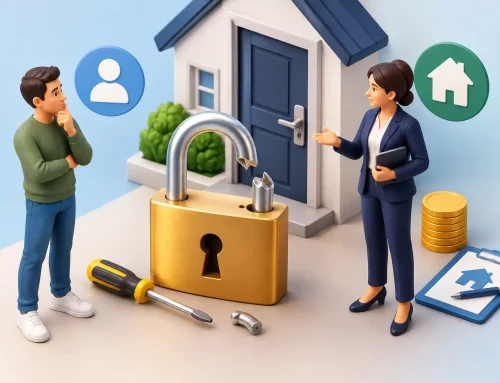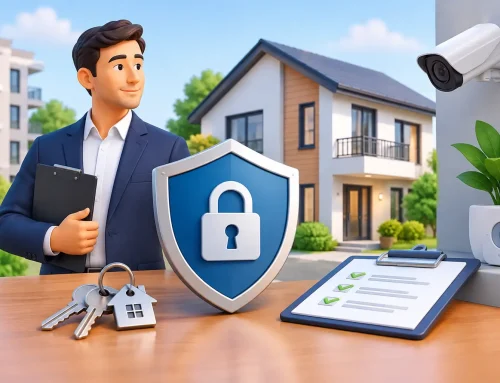
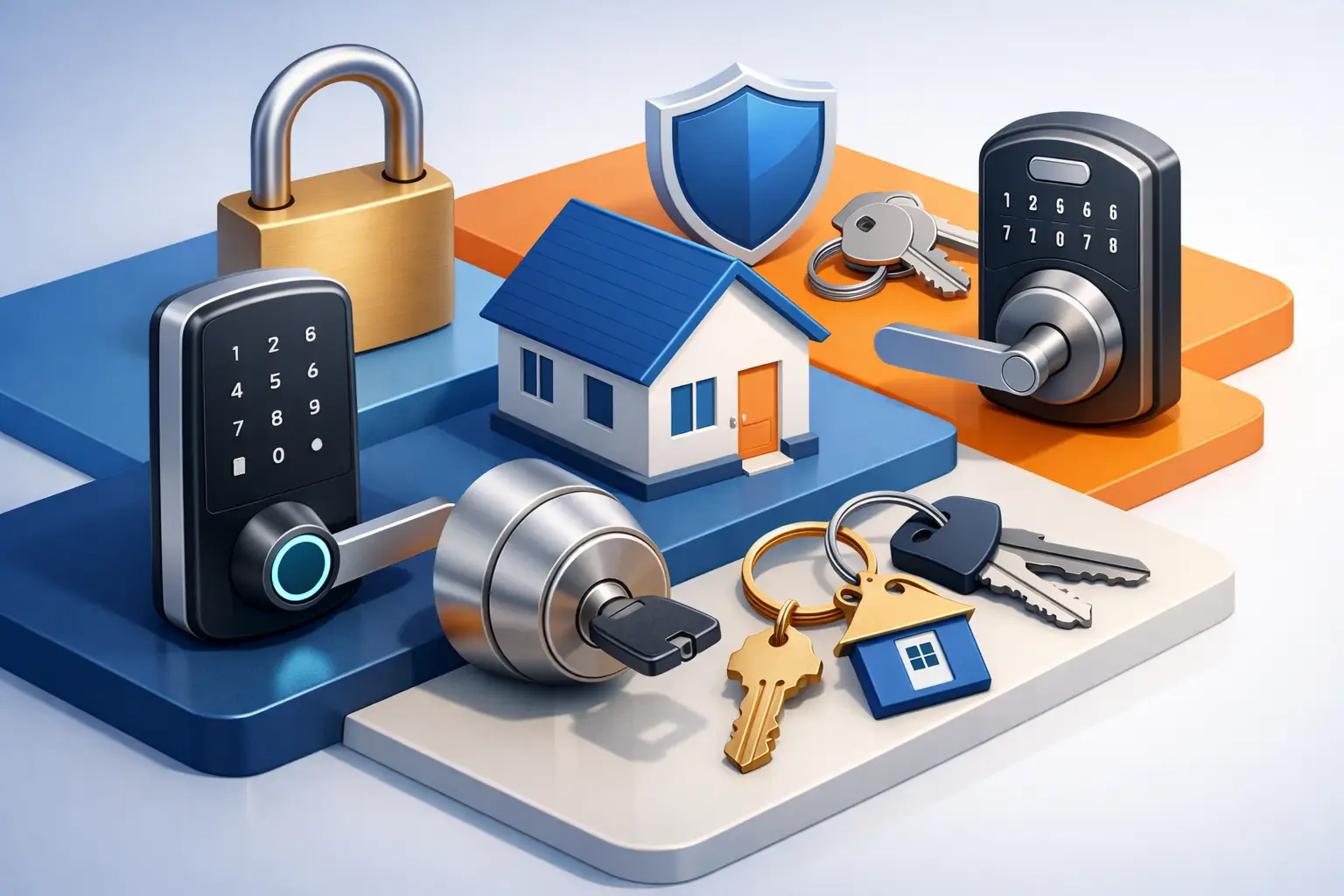
A tenant moves out on Friday, the new tenant collects keys on Monday, and nobody can say with confidence how many copies of the old key are still circulating. That is the point where choosing the best locks for rentals stops being a hardware decision and becomes a property security decision.
For landlords and property managers, a good rental lock needs to do more than keep a door shut. It should provide dependable day-to-day security, allow tenants to leave safely in an emergency, simplify changeovers, and stand up to regular use. The right choice depends on the property, the door, the tenancy arrangement and the level of key control required.
What the best locks for rentals need to do
The front door is the starting point, but it should not be considered in isolation. The door material, frame condition, strike plate, existing hardware and whether the property has a screen door all affect how well a lock performs. A premium cylinder fitted to a weak frame or loose strike plate will not deliver the protection expected.
For most rental homes, the priority is a quality entrance lock paired with sound installation. It should be reliable, easy for a tenant to operate, difficult to force from outside and simple to rekey between tenancies. A lock that is overly complicated can create calls for help. One that is too basic can leave the property vulnerable.
Safety matters just as much as security. Occupants must be able to exit quickly from inside without needing a key. On fire-rated doors, apartment corridors and some strata buildings, the locking hardware may also need to meet specific fire and building requirements. This is a situation where matching a lock by appearance alone can cause costly problems.
Deadlatches for main entry doors
A properly installed deadlatch is often one of the strongest choices for a rental property’s main hinged entry door. Unlike a standard latch, a deadlatch is designed to resist the common forced-entry method of slipping or shimming the latch bolt. When installed with a suitable strike plate and secure fixings, it offers meaningful protection for a front door.
Deadlatches work particularly well on houses, townhouses and ground-floor units where the entry door faces a street, car park or shared access area. They can be fitted as part of an entrance set, or alongside a separate handle depending on the door and existing hardware.
There are trade-offs. The tenant needs to understand how the lock operates, especially if it has a snib or internal locking function. The lock must also be selected and fitted so it does not restrict safe exit. A locksmith can assess the door swing, frame, clearance and existing holes before recommending the right configuration.
Deadbolts for added strength, where appropriate
A deadbolt can add a second point of security to an entry door, particularly on a detached home or a property with a solid timber door. Its solid bolt gives strong resistance against forced entry when it is fitted into a sound frame with long, appropriate screws.
However, a deadbolt is not automatically the best answer for every rental. On a fire-rated apartment door, certain deadbolts may not be suitable. A double-cylinder deadbolt, which requires a key from inside as well as outside, can create a serious escape risk and is generally not appropriate for occupied residential rentals.
If a deadbolt is being considered, the inside operation is critical. The occupant should be able to leave without searching for a key, even in low light or under pressure. Hardware should also work with any screen door, alarm system or existing door furniture rather than creating a frustrating daily routine.
Keyed entry sets for lower-risk doors
A quality keyed entry set can suit internal access doors, lower-risk side doors or rentals where the door design does not suit a deadlatch or deadbolt. These locks combine a handle and key cylinder in one unit and are familiar to most tenants.
Their strength varies significantly between products. Lower-cost hardware may feel adequate when new but can loosen, stick or fail after repeated use. Rental properties place more demand on locks than owner-occupied homes in many cases, because keys change hands, doors are moved in and out through, and maintenance issues can go unreported until they become urgent.
For a main external door, a keyed entry set is often better viewed as part of a locking solution rather than the whole solution. A locksmith may recommend combining it with a deadlatch, security screen door lock or another suitable measure based on the property’s risk level.
Smart locks: convenient, but only with a clear plan
Smart locks can make tenant changeovers easier. Instead of arranging physical keys, a property manager may issue a time-limited code or remove a former tenant’s access from an app. This can be useful for furnished rentals, short-term accommodation, managed portfolios and properties where contractors require controlled access.
The practical questions matter more than the technology. Who owns the administrator account? Is there a physical key override if batteries go flat? Can a tenant use the lock without a mobile app? What happens if the internet is down, a phone is lost or a tenant changes their number? The answers should be clear before installation.
Smart locks also need a sensible handover process. Tenants should receive written instructions, know how to use the internal escape function, and understand who to contact if the lock alerts, jams or loses power. For many standard long-term rentals, a conventional mechanical lock with a controlled key system remains the simpler and more dependable option.
Rekeying is often better than replacing the lock
At the end of a tenancy, landlords do not always need entirely new locks. If the existing lock body is in good condition, rekeying changes the internal combination so old keys no longer work. It is usually faster and more cost-effective than replacing every lock, while delivering the key security needed for the next tenant.
Rekeying is especially valuable where one key operates several doors. A locksmith can often arrange compatible cylinders so the front door, rear door, garage access and security screen door can be operated with fewer keys, without sacrificing sensible separation where it is needed.
Replacement is the better choice when a lock is worn, damaged, poorly fitted, obsolete or not providing the required level of security. It is also an opportunity to correct issues such as loose handles, weak strike plates, misaligned doors and poor locking on screen doors.
Key control protects the property between tenancies
The number of keys in circulation is one of the most overlooked rental security risks. Over several years, copies can be held by former tenants, cleaners, trades, neighbours, family members and previous managing agents. Even where keys are returned at vacate, there is no reliable way to know whether copies were made.
Restricted key systems offer stronger control because duplicate keys cannot be cut freely at a general key kiosk. Copies are supplied through authorised channels, which helps landlords and managers keep a record of who can request them. They are particularly useful for strata properties, executive rentals, offices attached to residences and portfolios with regular contractor access.
A practical key register should record the number of keys issued, the lock or door each key operates, and the date each key is returned. This small administrative step makes rekeying decisions easier and avoids confusion during an urgent lockout or maintenance call.
Do not overlook secondary doors and common weak points
A strong front-door lock cannot compensate for a poorly secured rear sliding door, garage entry or old screen door. Before selecting locks, walk around the property and check every accessible entry point. Pay close attention to doors hidden from the street, side gates that provide access to the backyard, and laundry doors near carports or garages.
Sliding doors may need a suitable patio door lock, pin or auxiliary security device, depending on their design. Security screen doors should have quality locking hardware and be properly fixed to their frame. A door that rattles when locked, has a visible gap near the latch, or can be lifted in its track needs attention before a new tenant moves in.
For Canberra landlords and property managers, seasonal conditions can expose marginal hardware too. Doors and frames can move with temperature changes, causing locks to bind or fail to latch properly. Regular adjustment is cheaper and less disruptive than an after-hours call when a tenant cannot secure their home.
A practical approach before the next tenancy
Before keys are handed over, arrange a lock and door check that covers the main entry, secondary entries, screen doors, garage access and any shared areas. Confirm that locks engage cleanly, internal exit is easy, strikes are secure and no old keys remain in circulation. Then decide whether rekeying, replacement or an upgrade is the sensible option.
Night & Day Locksmiths has supported Canberra properties for decades with scheduled lock changes, restricted key systems and urgent mobile locksmith assistance when a lock problem cannot wait. The best result is usually not the most expensive lock on the shelf. It is the right hardware, professionally fitted, with a clear plan for keys and tenant safety from one tenancy to the next.