Digital locks have gone from a hotel novelty to something you see on front doors all over Canberra. Keypads in Gungahlin new builds, fingerprint locks in Tuggeranong townhouses, app-controlled smart locks on Airbnbs in Braddon. But are digital locks worth it for your home? Most of the advice online comes from retailers and tech reviewers. They are good at comparing apps and features. They rarely talk about what happens when a lock is fitted to the wrong door, freezes on a July morning or needs a repair the manufacturer will not support. At Night & Day Locksmiths, we have been fitting, repairing and opening locks across the ACT since 1979, and we are regularly called out to digital locks that have failed. This guide gives you a locksmith’s honest view of digital locks in Canberra: what they do well, where they fall short, what they cost and who they genuinely suit.
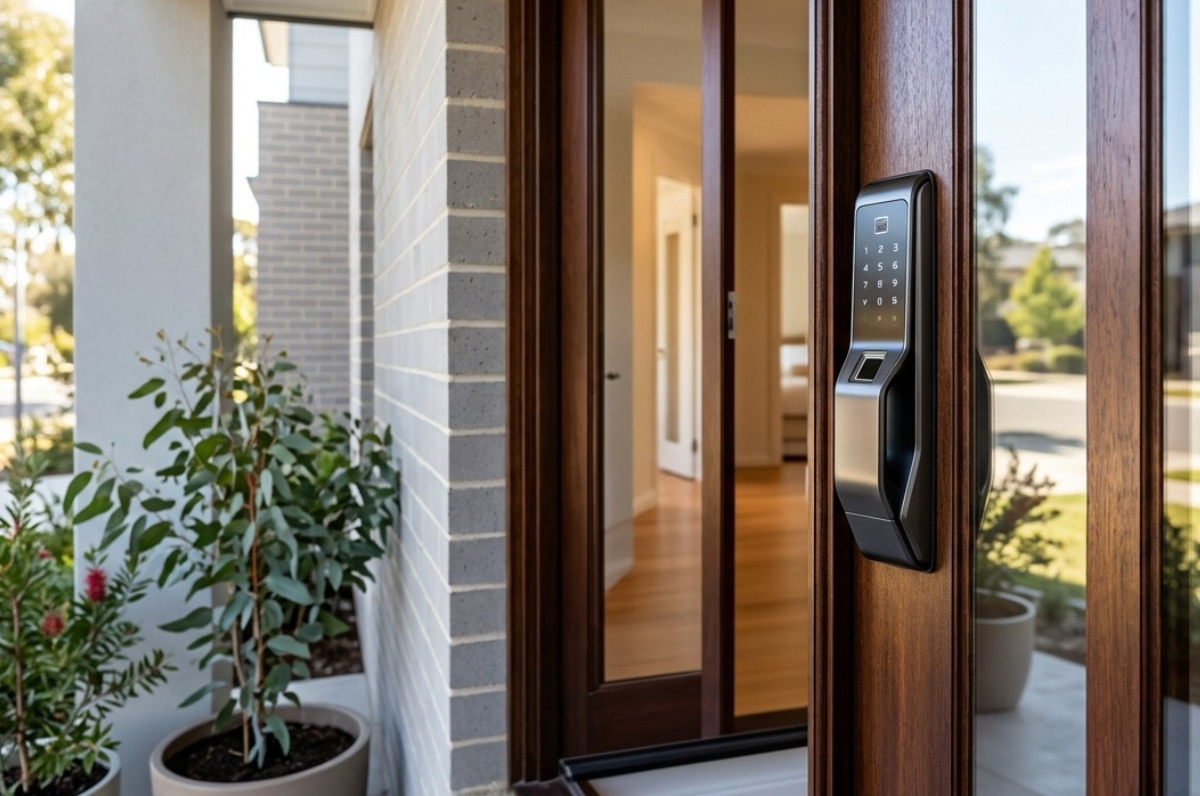
What Counts as a Digital Lock? Keypad, Smart and Fingerprint Locks Explained
“Digital lock” is a broad term. It covers any lock that lets you in with something other than a traditional key. Most fall into one of four groups.
- Keypad locks. You enter a PIN on a number pad. They run on batteries, need no app or internet, and are usually the simplest and most reliable digital option.
- Smart locks. These connect to your phone through Bluetooth, Wi-Fi or a home hub. You can unlock from an app, share digital keys, receive alerts and often control the lock remotely. Many also include a keypad.
- Fingerprint (biometric) locks. A sensor reads your fingerprint. They are fast and handy for families with kids who lose keys, and most include a keypad or key as a backup.
- Card, fob and tag locks. Common in apartments and offices, these open with a tapped card or fob. Some home models offer them alongside a keypad.
You will also hear the term keyless entry for homes, which simply means any of the above. Most quality digital locks still include a mechanical key override for emergencies, which matters more than many buyers realise.
The Real Benefits of Digital Locks for Canberra Households
For the right home, a digital lock solves everyday problems that traditional keys cannot. These are the benefits we see make a real difference for Canberra families.
- No keys to lose. Lost keys are one of the most common reasons we get called out. A keypad or fingerprint lock removes the problem entirely, and you never need to rekey because a key went missing.
- Temporary codes for visitors. Give the cleaner, dog walker, tradie or house-sitter their own code, then delete it when the job is done. No cutting copies, no chasing keys afterwards. (See our guide on leaving keys with a house-sitter for more on this.)
- An audit trail. Many smart locks log who entered and when. It is useful for keeping track of trades, checking teenagers got home, or confirming the cleaner arrived.
- Convenience for families. Kids coming home from school do not need a key on a lanyard. Parents arriving with shopping bags or a pram can unlock with a fingerprint or tap.
- Auto-locking. Many models lock automatically after the door closes, so you are never left wondering whether you locked up.
- Remote access. With a Wi-Fi smart lock, you can let a family member in while you are at work or check the door is locked from the airport.
The common thread is control. A digital lock lets you decide who has access, and for how long, without a single key changing hands.
Where Digital Locks Fall Short: A Locksmith’s Honest Downsides
Digital locks are not perfect, and anyone who tells you otherwise is usually selling one. These are the problems we see most often on callouts.
- Flat batteries. Most digital locks run on AA or AAA batteries and give plenty of low-battery warnings. People still ignore them. When the batteries finally die, you need the backup key, an external power terminal or a locksmith.
- App and Wi-Fi dependence. Smart features rely on your phone, your home network and the manufacturer’s servers. If the app is discontinued or the company stops supporting a model, some features may stop working. A lock that can still be opened by keypad or key is far less exposed to this risk.
- Cheap imports. Online marketplaces are full of low-cost digital locks with impressive feature lists. Many use thin housings, weak latches and electronics that fail within a year or two. Spare parts and local support are often non-existent.
- Repair limitations. A traditional lock can usually be repaired, rekeyed or serviced. Many digital locks are sealed units. If the electronics fail out of warranty, replacement is often the only option.
- Lost backup keys. Because owners rarely use the mechanical override key, it tends to go missing. Then a flat battery becomes a lockout.
- Learning curve. Older residents or visitors can find keypads, apps and auto-locking confusing at first, which can lead to accidental lockouts.
None of these are deal-breakers. They are reasons to choose a quality lock, have it fitted properly and keep the backup key somewhere you can reach.
Are Digital Locks Secure? What Actually Matters for Break-In Protection
A well-made digital lock, properly installed, can be every bit as secure as a quality traditional deadlock. A poorly made one can be weaker than a basic lever set. The difference comes down to a few things.
- The deadbolt still does the work. Most burglaries in Australia involve physical force, such as kicking, levering or forcing a door, rather than any kind of digital attack. What stops a forced entry is a solid bolt with a decent throw, a reinforced strike plate and a strong door and frame. The keypad on the front matters far less than the metal behind it.
- Build quality. Look for solid metal housings, a hardened bolt and an anti-tamper design on the outside unit. Lightweight plastic or thin die-cast bodies are a warning sign.
- Standards and ratings. Choose locks from established brands that are tested to recognised standards and sold with Australian support. Ask whether the lock is suited to Australian door hardware and whether it is designed for external use.
- Hacking risk versus physical attack. Reputable smart locks use encrypted connections, and remote hacking of a home lock is rare compared with simple forced entry. You can reduce the risk further by keeping the app and firmware updated, using a strong Wi-Fi password and turning off remote features you do not need.
- Code hygiene. Wipe the keypad regularly so fingerprints do not reveal your digits, avoid obvious codes like 1234 or birth years, and delete codes as soon as a visitor no longer needs them.
In short, judge a digital lock the same way a locksmith judges any lock: by its bolt, its build and how well it is fitted.
Digital Locks vs Traditional Deadbolts: Which Suits Your Home?
Both options can secure your home well. The right choice depends on how you live and who needs access.
| Factor | Digital lock | Traditional deadbolt |
|---|---|---|
| Keys to lose | None (backup key only) | Yes |
| Sharing access | Codes added and deleted in seconds | Copies must be cut and collected |
| Rekeying needed if access changes | No, just change codes | Yes |
| Power needed | Batteries, checked regularly | None |
| Upfront cost | Higher | Lower |
| Repairability | Often limited to replacement | Usually repairable and rekeyable |
| Weather sensitivity | Electronics can be affected by extremes | Minimal |
| Activity log | Available on many smart models | No |
| Ease for older users | Varies, can take practice | Familiar to everyone |
- Choose a digital lock if several people need access, you regularly hand over keys to sitters or tradies, or convenience is a priority.
- Stick with a quality deadbolt if you want the simplest, lowest-maintenance option, your door is not suited to a digital lock, or the people using it prefer a key.
Many Canberra homes end up with both: a digital lock on the main entry and quality keyed deadlocks on the back and side doors.
Will a Digital Lock Fit Your Door? Compatibility Checks Before You Buy
This is the step most buyers skip, and it causes more problems than anything else. A digital lock that does not suit your door will be unreliable, insecure or both. Check these points before you buy.
- Door thickness. Most digital locks are designed for a specific thickness range. Very thin or unusually thick doors may need an extension kit or a different model.
- Backset. This is the distance from the edge of the door to the centre of the lock. Australian doors commonly use 60 mm or 70 mm backsets. The lock must match, or the door may need modification.
- Existing holes and cut-outs. Replacing an old lock often leaves holes that do not line up with the new one. Some locks cover them neatly; others leave gaps or need patching.
- Timber vs aluminium frames. Solid timber doors suit most digital locks. Aluminium and glass doors often have narrow stiles that need a specific narrow-profile lock, and many standard digital locks simply will not fit.
- Door alignment. If your door drops, rubs or needs a shove to latch, a motorised bolt will struggle and drain batteries. Fix the alignment first.
- Security and screen doors. If you have a security screen door, think about how you will reach the keypad and whether the inner lock still makes sense.
- Older Canberra homes need extra care. Many houses built from the 1960s to the 1980s in suburbs like Weston Creek, Woden and Belconnen have original timber doors, older mortice locks or frames that have moved over the decades. These doors can absolutely take a digital lock, but they often need adjustment, a new strike plate or frame reinforcement first.
A locksmith can check your door in a few minutes and tell you which locks will fit before you spend a cent.
How Canberra’s Climate Affects Digital Lock Performance and Batteries
Canberra is tougher on electronics than most Australian cities. Frosty winter mornings regularly drop below zero, and summer days can push past 35°C. A digital lock on an exposed front door has to cope with both.
- Cold and battery life. Alkaline batteries lose capacity in the cold. A lock that happily ran for a year in a mild climate may give low-battery warnings much sooner through a Canberra winter. Many manufacturers recommend lithium batteries for cold conditions, as they hold their charge better at low temperatures. Check your lock’s manual before switching.
- Frost, condensation and touchscreens. Touch keypads can become slow or unresponsive when iced over or wet with morning condensation. Fingerprint sensors may struggle with cold, dry fingers too. Physical buttons and a covered keypad tend to cope better.
- Heat and direct sun. West-facing doors in full afternoon sun can heat the outer unit well beyond the air temperature. Over time, this can fade displays, degrade seals and shorten the life of cheaper electronics.
- Bushfire smoke and dust. Fine dust and smoke can affect sensors and keypads, particularly on doors without an eave or porch.
Practical tips for Canberra homes:
- Choose a lock rated for external use with a stated operating temperature range
- Install on a door protected by an eave, porch or awning where possible
- Change batteries before winter, not when the lock starts beeping
- Keep the backup key or emergency power option somewhere you can reach from outside the house
- Wipe the keypad and sensor clean every few weeks
What Digital Locks Cost to Buy and Install in Canberra
The total cost of a digital lock depends on two things: the lock itself and the work needed to fit it to your door. As a rough guide to the market:
| Lock type | Typical features | Indicative lock price |
|---|---|---|
| Entry-level keypad | PIN entry, backup key, no app | Around $150 to $350 |
| Mid-range smart lock | Keypad, Bluetooth app, temporary codes | Around $350 to $700 |
| Premium smart or biometric | Fingerprint, Wi-Fi, remote access, activity log | $700 and up |
Prices are indicative only and vary by brand, finish and supplier.
What affects installation cost:
- Whether the lock is a straight swap or the door needs new holes, mortising or patching
- Door material and type (timber, aluminium, glass, double doors)
- Frame or strike plate repairs needed for the bolt to throw properly
- Whether you supply the lock or the locksmith supplies it
- Wi-Fi bridge, app setup and programming user codes
- After-hours or urgent work
The cheapest lock is rarely the cheapest option over five years. A quality lock fitted correctly will outlast two or three budget units, and you avoid paying for lockouts and replacements along the way.
At Night & Day Locksmiths, we provide free, obligation-free quotes with an upfront price before any work begins. Pensioners receive a 10% discount.
DIY Install or Professional Locksmith? Why Fitting Matters
Many digital locks are marketed as easy DIY installs, and on a perfectly aligned, standard door, a handy homeowner can sometimes manage it. In practice, a large share of the faulty digital locks we see are not faulty at all. They were fitted badly.
Common DIY fitting problems:
- The bolt rubs on the strike plate, so the motor strains and batteries drain quickly
- The bolt does not fully extend, leaving the door less secure than it looks
- Cables between the inside and outside units are pinched, causing intermittent faults
- The lock is fitted to a door it was never designed for
- Screws are overtightened, cracking housings or binding the mechanism
Warranty risk. Some manufacturers will not honour a warranty if the lock was installed incorrectly or modified. A professional install protects your investment.
What a professional install includes:
- Checking your door, frame and alignment before recommending a lock
- Precise mortising and drilling so the lock sits square and the bolt throws cleanly
- Fitting or adjusting the strike plate and reinforcing the frame where needed
- Programming codes, fingerprints and app access, and showing you how it all works
- Testing the lock repeatedly, including the backup key
At Night & Day Locksmiths, our workmanship is covered by a 3-month guarantee, and products carry the manufacturer’s warranty, normally 12 months. Our technicians are licensed, insured, police-checked and MLAA-accredited.
Who Digital Locks Are (and Aren’t) Worth It For
So, are digital locks worth it? For many Canberra households, yes, provided you choose a quality lock and have it fitted properly. Here is our verdict by situation.
| Who you are | Worth it? | Why |
|---|---|---|
| Busy families | Yes | No keys for kids to lose, auto-locking, easy access with full hands |
| People who travel often | Yes | Temporary codes for house-sitters and pet carers, no keys to collect |
| Airbnb and short-stay hosts | Yes | Unique codes per guest, no key handovers, remote access |
| Landlords and property managers | Usually | No rekeying between tenants, but check the lease and tenant consent first |
| Elderly residents | Depends | Great for carers and family access; choose simple buttons and keep a key backup |
| Homes with aluminium or glass doors | Depends | Needs a narrow-profile model; not every door suits one |
| Anyone wanting the lowest-maintenance option | Probably not | A quality keyed deadlock needs no batteries or apps |
If you fall into the “depends” group, a quick chat with a locksmith will usually settle it. Sometimes the best answer is a digital lock on the front door and quality keyed locks everywhere else.
The Bottom Line on Digital Locks for Canberra Homes
Digital locks can be a genuine upgrade for Canberra homes, as long as you go in with your eyes open. To recap:
- Keypad, smart and fingerprint locks all remove the hassle of physical keys
- The biggest benefits are temporary codes, no lost keys and better control over who gets in
- The main downsides are batteries, app dependence, cheap imports and limited repairability
- Security depends on the bolt, the build and the fitting, not the technology on the front
- Check your door’s thickness, backset, frame and alignment before you buy
- Canberra’s frosty winters and hot summers call for an external-rated lock and regular battery changes
- A professional install protects both your security and your warranty
Thinking about a digital lock? Call Night & Day Locksmiths on 02 6290 1938 or request a free, obligation-free quote online. We will check your door, recommend a lock that suits your home and the Canberra climate, and fit it properly the first time. Family owned since 1979, based in Mawson and servicing the whole ACT and Queanbeyan.