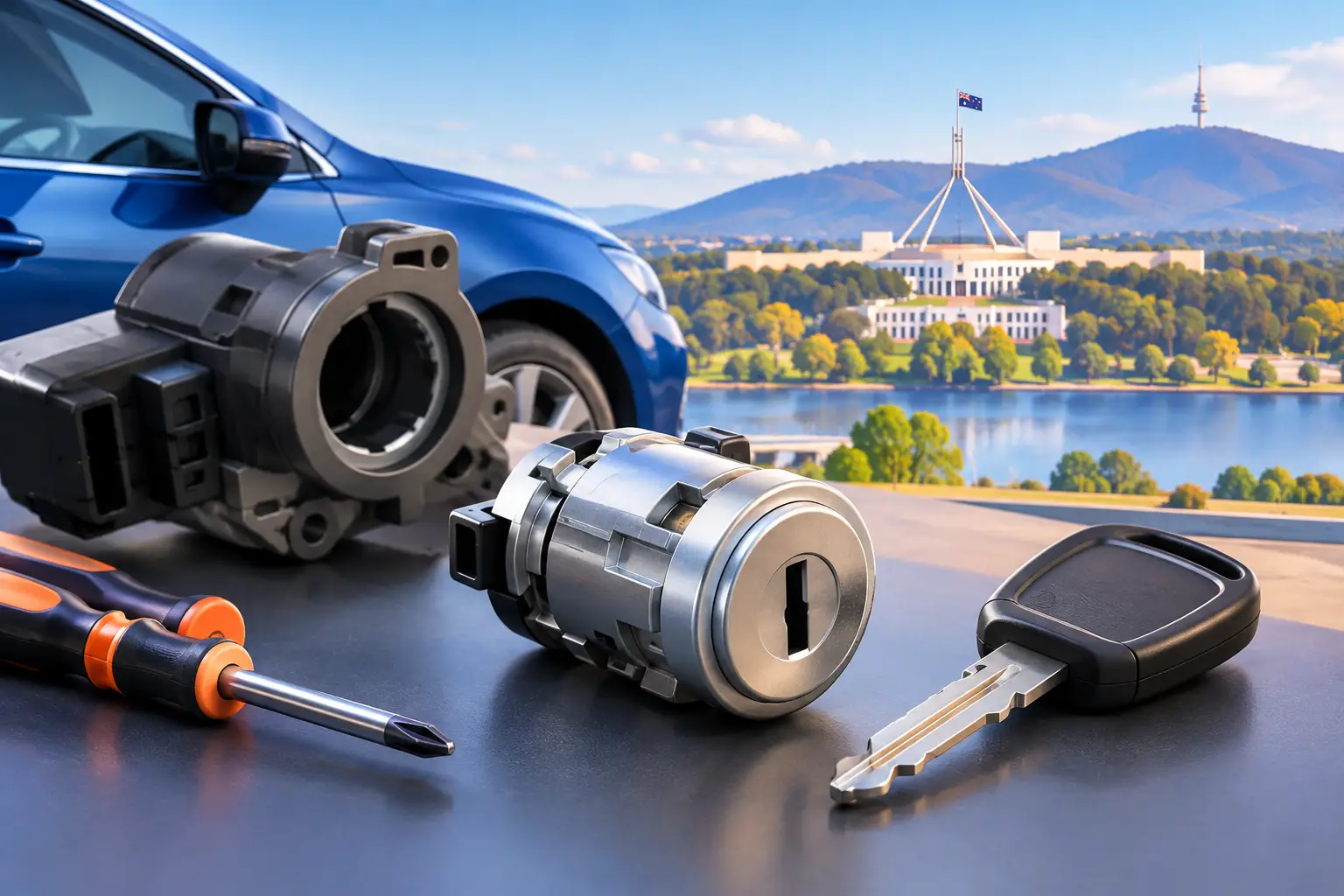
A key that suddenly will not turn can leave you stranded in a driveway, car park or outside work. This ignition barrel replacement guide explains what may be failing, what to avoid forcing, and when a qualified automotive locksmith is the safest way to get back on the road.
The ignition barrel is the mechanical part of your vehicle where the key is inserted and turned. It works alongside the ignition switch and, on many modern vehicles, an immobiliser system that recognises the transponder chip in the key. Because several systems can produce similar symptoms, replacing the barrel is not always the first or correct answer.
What an ignition barrel does
In a traditional keyed vehicle, the ignition barrel contains a series of small wafers or pins matched to the cuts on your key. When the right key is inserted, those components line up and allow the barrel to rotate through the accessory, ignition and start positions.
Turning the barrel then operates the ignition switch, either directly or through a linkage. The switch sends power to the vehicle’s electrical systems and starter circuit. In many later-model vehicles, the key also needs to pass an electronic immobiliser check before the engine will start.
That distinction matters. A worn barrel can stop the key turning, while a faulty ignition switch may allow the key to turn but leave the dash lights, accessories or starter unresponsive. A damaged key, flat battery, steering lock or immobiliser fault can also look like an ignition-barrel problem at first.
Ignition barrel replacement guide: signs replacement may be needed
A little resistance is worth investigating before it becomes a complete lockout. Keys and barrels wear together over years of use, particularly in work vehicles, older cars and vehicles that carry a heavy bundle of keys on the keyring.
Replacement may be appropriate if the key repeatedly sticks, only turns after several attempts, has to be wiggled in a certain position, or comes out when the ignition is not fully in the off position. A barrel that spins freely without bringing the ignition on is another clear sign that the internal mechanism may have failed.
Pay attention if the key will not turn after parking with the wheels hard against a kerb. This can simply be pressure on the steering lock rather than a failed barrel. Gently move the steering wheel left and right while applying light turning pressure to the key. Do not yank the wheel or force the key. If it remains locked, stop before the key bends or snaps.
A key that is visibly worn, cracked or twisted can be the problem. Trying a properly cut spare key is useful, provided it is an original-quality key and not a badly worn copy. If the spare turns smoothly, a new key may resolve the issue without replacing the ignition barrel.
Do not force a stuck ignition key
When you are running late, it is tempting to spray lubricant into the keyway or grip the key with pliers. Both can make a manageable repair more expensive. Excess lubricant attracts dirt and can affect the tiny components inside the barrel. Pliers can bend the key, while a broken key lodged in the ignition adds extraction work before the underlying fault can be assessed.
Avoid repeatedly turning the key with force, especially on vehicles with an electronic steering lock or a proximity key system. Also avoid removing steering-column covers unless you understand the vehicle’s restraint systems. Airbag components and wiring are often located around the steering column.
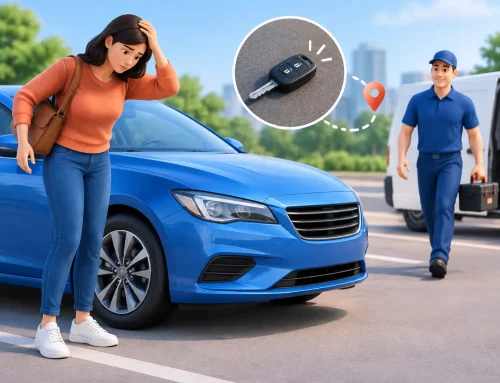
If the vehicle is parked safely, leave it secure and arrange a professional inspection. If you are stuck somewhere exposed or need urgent access to your vehicle, a mobile automotive locksmith can assess the fault on site and advise whether repair, replacement or key work is needed.
How a professional replacement is handled
An ignition barrel replacement is not one identical job across every make and model. The process depends on the vehicle’s age, security design, key type and whether the original key is available.
First, the locksmith checks the key and confirms the actual fault. This can prevent an unnecessary barrel replacement where the issue is a worn key, a flat vehicle battery or an electrical ignition-switch fault. The steering lock, keyway and barrel operation are assessed carefully, without damaging the steering column or surrounding trim.
If the barrel has failed, the correct replacement is selected and fitted. On some vehicles, it may be possible to build or configure a replacement barrel to suit the existing key. On others, the new barrel may come with a different mechanical key code. That can mean one key for the ignition and another for the doors unless the locks are rekeyed to match.
The final stage is especially important for modern vehicles. If the key contains a transponder chip, the chip may need to be programmed or matched to the vehicle’s immobiliser. A mechanical key that turns the barrel is not necessarily a key that will start the engine. The work should finish with checks of the ignition positions, steering lock, remote functions where relevant, central locking and engine start authorisation.
Repair, rekey or replace: which option makes sense?
The best solution depends on what has failed and how long you plan to keep the vehicle. If the issue is only a worn key, cutting a new key from the correct code or an unworn original may be the most cost-effective fix. It also reduces further wear on the ignition.
Where the barrel is binding or internally damaged, replacement is generally more reliable than trying to live with intermittent operation. An ignition that works only after several attempts has a habit of failing at the most inconvenient time.
Rekeying is worth discussing when a replacement barrel would otherwise leave you carrying separate keys. It can provide the convenience of one mechanical key for the doors and ignition, although feasibility varies by vehicle. For late-model vehicles with highly integrated electronic systems, the right answer may involve a dealer-supplied component, specialised programming or a combination of locksmith and auto-electrician work.
What affects ignition barrel replacement cost?
There is no sensible one-price answer, because the part itself is only one element of the job. The vehicle make, model and year affect availability and complexity. A straightforward older vehicle with a standard metal key is usually different from a late-model vehicle with an electronic steering lock, remote key, smart key or transponder immobiliser.
Cost can also change depending on whether the key is available, whether it has broken inside the barrel, whether the vehicle needs on-site attendance, and whether new keys require programming. After-hours assistance can be valuable when the vehicle is immobilised, but it may carry a different call-out cost from a scheduled daytime appointment.
Ask for a clear explanation of the diagnosis, parts required, key and programming requirements, and whether the replacement will work with your existing door key. A reputable locksmith will explain the practical options before work begins, rather than treating every ignition fault as an automatic full replacement.
Choosing the right help when your car will not start
A locksmith who works on automotive ignitions should be able to identify the difference between a key issue, a mechanical barrel problem and a likely electrical fault. They should also have the tools and experience to work around the steering column carefully and verify that any replacement key communicates correctly with the vehicle.
For Canberra drivers, choosing an established, fully licensed local locksmith matters most when the problem happens outside ordinary hours or away from home. Bring proof of ownership or authority to access the vehicle, such as photo identification and registration documents where available. This protects you and helps the locksmith proceed without delay.
Night & Day Locksmiths provides mobile automotive locksmith support for ignition and key issues, with the practical focus that matters when a vehicle will not cooperate: identify the fault properly, protect the vehicle from unnecessary damage and get you moving again where possible.
A sticking ignition rarely improves with use. Acting while the key still turns can give you more repair options, less disruption and one less reason to be stranded when you need your car most.