A lock that jams when you are rushing out the door, carrying groceries or trying to secure your business after hours is more than an inconvenience. Before you try to force it, knowing how to fix jammed lock problems safely can save the key, the door and the lock itself. The right approach depends on whether the key will not enter, will not turn, turns without operating the door, or has snapped in the cylinder.
First, work out what is actually jammed
A jammed lock is not always a failed lock. On external doors, a small shift in the door frame caused by heat, cold, swelling timber or a building settling can put pressure on the latch or deadbolt. The lock may feel stuck, but the real problem is that the bolt is no longer lined up cleanly with the strike plate.
Start by checking whether the door opens and locks normally while it is open. If the key turns freely with the door open but jams once the door is shut, door alignment is the likely issue. Gently push, pull or lift the door while turning the key. Do not lean your full weight on it. A slight change of pressure can take the load off the bolt and allow it to move.
If the key is difficult to insert or turn even with the door open, the problem is more likely inside the keyway or cylinder. Dirt, worn pins, moisture, corrosion or a damaged key can all cause trouble. Older locks can also simply reach the point where their internal parts are too worn to operate reliably.
How to fix a jammed lock safely
Check the key before touching the lock
Look closely at the key in good light. A bent key, worn teeth or a small crack near the shoulder can stop it from lining up correctly inside the lock. Do not use a damaged key to force the mechanism. It can break off, leaving part of the key lodged in the cylinder.
If you have a spare key, try it gently. A spare that works points to a worn or damaged everyday key, rather than a lock fault. It is worth having a fresh key cut from the best original available instead of repeatedly copying a worn copy.
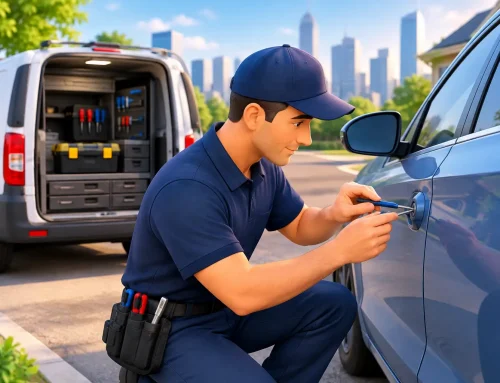
For a car, use the manufacturer key or properly programmed spare where possible. A transponder key may have an electronic issue as well as a mechanical one, so a key that turns but will not start the vehicle needs a different diagnosis.
Clear surface debris carefully
Dust, grit and pocket lint can build up in a keyway, particularly on gates, sheds, mailboxes and locks exposed to Canberra weather. Hold the keyway facing down if practical and use short bursts of compressed air to dislodge loose debris.
Avoid poking wire, hairpins or sharp objects into the lock. They often push debris deeper, damage the internal pins or break inside the keyway. A vacuum nozzle can help remove loose material from around the face of the lock, but it should not be forced into the opening.
Use the right lock lubricant sparingly
A purpose-made dry lock lubricant, such as graphite or PTFE lock lubricant, can help when the key enters but feels rough or resistant. Apply only a small amount according to the product directions, then insert and remove the key a few times before attempting to turn it.
Do not soak the cylinder with general-purpose oil, cooking oil or household spray lubricants. They may give temporary relief but can attract dust and turn into a sticky residue inside the lock. The same caution applies to grease. Locks need a light, suitable lubricant, not a flooded mechanism.
If the lock is frozen or damp, gently warming the key in your hands may help. Do not use an open flame, boiling water or a high-heat tool on the lock. Rapid heat can damage finishes, seals and nearby door components.
Take pressure off the door and bolt
When a deadbolt will not turn, try applying gentle pressure in different directions to the door while turning the key. Push the door towards the frame, pull it towards you, then carefully lift the handle or door edge if it has dropped slightly. The aim is to relieve pressure, not force the key.
For a latch lock, try turning the handle as you move the door slightly. If a door has sagged, the latch may be catching on the strike plate. This is common on older timber doors, heavy security doors and gates that have moved over time.
If this technique works only occasionally, treat it as a warning sign. The strike plate, hinges or door alignment may need adjustment before the problem becomes a full lockout.
When forcing the lock makes the problem worse
The moment a key feels as though it might bend, stop. Twisting harder can shear the key, strip parts of the cylinder or damage a multipoint locking system. A broken key can turn a straightforward service call into a more involved repair.
Never use pliers to gain extra leverage on a key. The increased force is likely to damage both the key and the lock. Avoid hitting the lock, drilling it or removing screws at random. Many modern door locks have internal components that are difficult to refit correctly, and some security hardware is designed to resist tampering.
A lock that turns but does not open the door is also a reason to pause. The fault could be a broken tailpiece, cam, latch mechanism or internal gearbox rather than a cylinder issue. Continued turning may cause further damage.
With electronic, keyless or smart locks, first check the battery and follow the manufacturer’s emergency power procedure if one is provided. Do not spray lubricant into electronic hardware. If the keypad is unresponsive, the lock is displaying an error or a mechanical override key will not turn, professional assessment is usually the safest next step.
Signs you need a locksmith now
Some jammed locks are suitable for careful troubleshooting. Others need prompt help, particularly where security or access is at stake. Call a licensed locksmith if the key has broken in the lock, the lock has been damaged during an attempted entry, or the door cannot be secured.
You should also arrange assistance when the cylinder spins freely, the key will not come out, a commercial fire door will not latch properly, or a vehicle ignition is jammed. For businesses, strata properties and rental homes, a faulty lock can create a security risk or affect compliance with access and egress requirements.
If you are locked out late at night, have a child or vulnerable person inside, or cannot secure a property after a break-in, do not keep experimenting. A 24/7 mobile locksmith can assess the fault, gain entry with appropriate methods and advise whether repair, rekeying or replacement is the best option.
In Canberra, Night & Day Locksmiths provides around-the-clock assistance for residential, commercial and automotive lock problems. As a family-owned, fully licensed local locksmith business operating since 1979, the team can address the immediate issue while checking whether the underlying hardware still provides reliable security.
Prevent the next lock jam
A lock that has jammed once deserves attention even if it starts working again. Have worn keys replaced, keep one spare in a secure and sensible location, and use a suitable lock lubricant as part of periodic maintenance for exposed locks. For external doors, check that hinges are tight and that the latch and deadbolt line up cleanly with their strike plates.
After moving into a property, changing tenants or losing a key, rekeying is often a better security decision than relying on old keys still in circulation. Businesses may also benefit from a planned maintenance check of high-use doors, restricted key systems and access hardware before a small fault disrupts staff or customers.
Treat a sticking lock as an early warning, not a test of strength. A calm check, gentle pressure and the right help at the right time will usually protect both your access and your security.