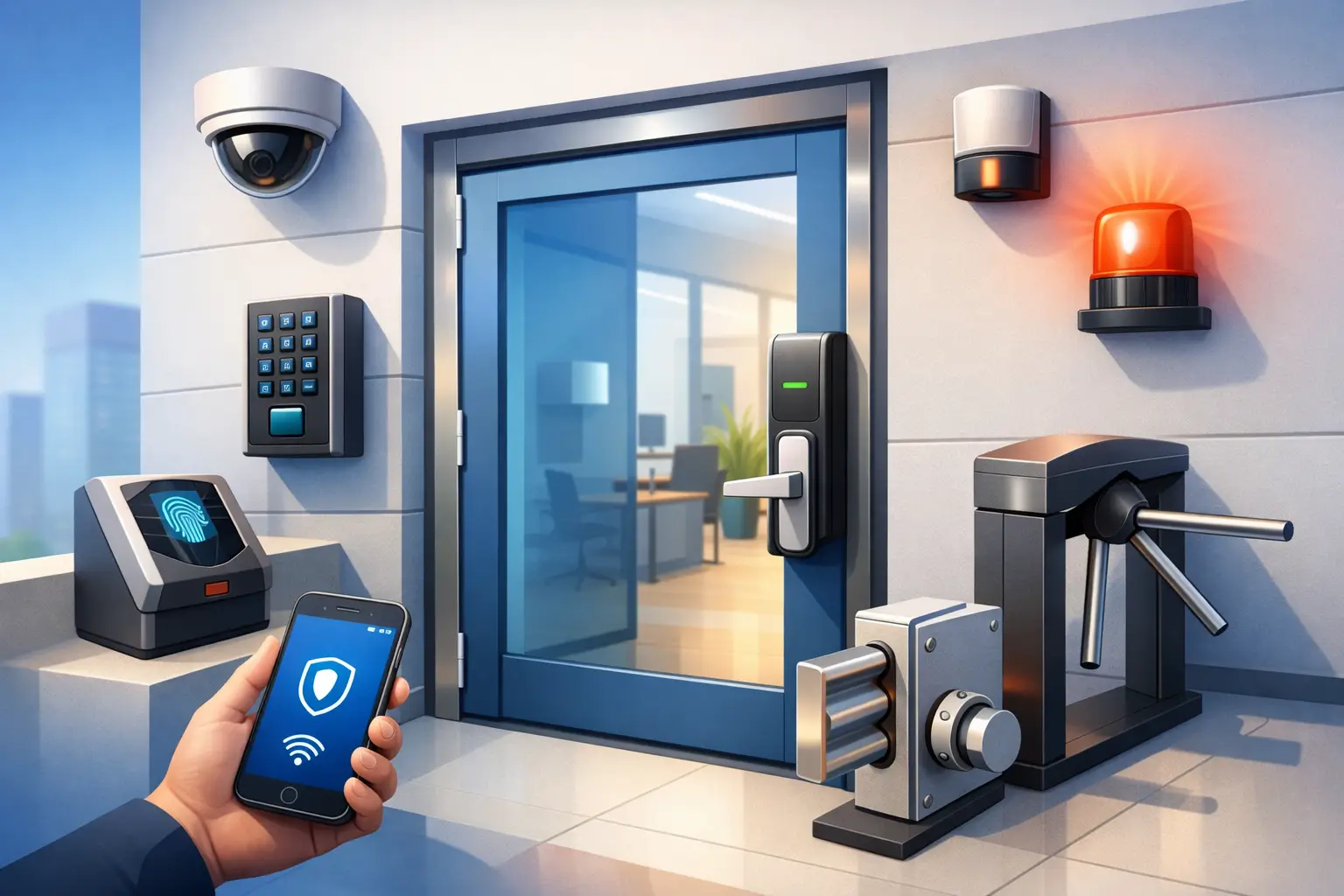
A rear door that is held shut with a tired deadlock can turn a normal trading day into an expensive incident. Commercial door security upgrades are not only about making forced entry harder. They help you control who comes and goes, protect staff working early or late, reduce key risks and respond sensibly when a tenancy, team or building use changes.
For offices, shops, warehouses, medical practices and strata properties, the best answer is rarely one new lock. Security works when the door, frame, locking hardware, keys and daily routines all support each other. A fully licensed locksmith can assess those parts together and recommend improvements that suit the premises, the risk and the budget.
Start with the doors that create the most risk
Most businesses have a small number of doors that deserve immediate attention: the main entry, rear delivery door, staff entrance, internal door to stock or records, and any gate connecting the building to a laneway or car park. Each has a different job, so each needs a different level of protection.
A front customer entrance may need convenient access during business hours and reliable locking at close. A rear door may need stronger resistance to attack, good lighting and a way for staff to leave safely without carrying multiple keys. An internal server room, pharmacy store or high-value stockroom may need restricted access and a clear record of who entered.
Walk through the property after hours as well as during the day. Look at sightlines, lighting, gaps around doors, worn hinges, loose strike plates and doors that do not latch cleanly. A high-quality lock cannot perform properly if the frame is weak or the door is misaligned.
Commercial door security upgrades to prioritise
Upgrade the lock and the door hardware together
A commercial-grade deadlock, mortice lock or high-security cylinder can provide a major improvement over basic hardware. The right option depends on the door material, whether it is aluminium, timber or steel, how often it is used and whether people need to exit quickly in an emergency.
Do not focus on the cylinder alone. Reinforced strike plates, longer fixing screws into solid framing, hinge protection and properly adjusted door closers can be just as important. On outward-opening doors, hinge bolts or security hinges may be required to prevent the door being lifted or forced from the hinge side.
For glass doors, protection may involve specialised lock hardware, secure patch fittings or changes to the way the door is secured after hours. The solution needs to suit the door design without creating damage, poor operation or an unsafe exit route.
Move beyond uncontrolled key copying
Standard keys are easy to pass between staff, contractors and former tenants. Once a key leaves your control, it can be copied without anyone knowing. Restricted key systems provide greater control because duplication is managed through authorised channels.
This is particularly useful for property managers, medical practices, schools, warehouses and businesses with several staff members or contractors. You can also create a master key system so authorised managers hold one key for multiple areas while staff keys only open the doors relevant to their role.
A master key system is convenient, but it must be planned carefully. Giving too many people access to too many doors defeats the purpose. Keep a current key register, record every issue and return, and make key control part of your offboarding process when staff or tenants leave.
Consider electronic access where keys create problems
Keyless entry can be a practical choice for doors used by changing teams, cleaners, delivery staff or tenants. Depending on the system, staff may use a PIN, fob, card or mobile credential. Access can be removed without recovering a physical key, which is valuable when someone leaves unexpectedly.
Electronic access control also makes it easier to set time-based permissions. A contractor may only need entry between certain hours, while a manager may require access at all times. For larger premises, audit trails can assist with investigating incidents and managing operations.
There are trade-offs. Electronic systems require suitable installation, ongoing administration and a plan for power or communication failures. They should be selected with the building layout and exit requirements in mind, rather than added simply because they are new technology. A small office may be better served by quality mechanical locks and restricted keys, while a multi-tenant site may gain far more from access control.
Protect emergency exits without compromising safety
Fire exits and emergency doors need particular care. They must allow people to leave quickly when required, but they should not become an easy point of entry from outside. Panic bars, exit devices, monitored door hardware and appropriate external security can help achieve both outcomes.
Never fit hardware that prevents lawful emergency egress or alters a fire-rated door without checking the relevant requirements. The door, frame, closer, seals and locking hardware can form part of a tested fire-door assembly. A security upgrade that compromises that assembly can create serious safety and compliance issues.
Strengthen the perimeter around the door
The lock is only one part of the perimeter. Poor lighting gives intruders cover. Damaged fencing, accessible bins, untrimmed landscaping and unsecured roller doors can make a well-locked entry less effective. CCTV and alarms can add useful deterrence and evidence, but they do not replace sound physical security.
If a door is frequently propped open for deliveries or airflow, address the reason rather than accepting the risk. It may be possible to adjust delivery procedures, add a door closer, use a controlled access point or improve ventilation. Security measures only work when staff can realistically follow them.
Signs your business should act now
Security upgrades are often delayed until after a break-in, lost master key or staff incident. Acting earlier is usually simpler and less disruptive. Arrange an assessment if you have noticed any of the following:
- Keys have been lost, copied freely or are still held by former staff, tenants or contractors.
- Doors stick, fail to latch, have loose hardware or show damage around locks and frames.
- Different areas of the business have different security standards with no clear key plan.
- Staff regularly prop doors open or share codes because access is inconvenient.
- You have moved premises, changed tenants, expanded operations or begun storing higher-value stock.
After a break-in or attempted forced entry, do more than replace the damaged lock. Identify how access was gained and whether the surrounding hardware, lighting, key management or staff procedures also need attention. A quick repair restores operation; a considered upgrade reduces the chance of the same weakness being used again.
Choose upgrades that fit the way you operate
The strongest-looking hardware is not automatically the right choice. A busy retail door needs durable equipment that can handle constant use. A warehouse may need access zones for drivers, office staff and contractors. A strata building needs consistent security without making daily access difficult for residents, trades and emergency services.
Start by deciding what needs protection, who genuinely needs access and when they need it. Then set priorities. A business with a limited budget may get better results by securing one vulnerable rear entry, rekeying the premises and introducing restricted keys than by installing technology across every door at once.
It also pays to plan for maintenance. Door closers need adjustment, batteries need replacement, access permissions need review and damaged locks need prompt repair. Keep a simple record of equipment, keyholders, codes and service dates. This prevents small faults from becoming security gaps.
For Canberra businesses, a local assessment can account for the building type, site access and the practical demands of your staff. Night & Day Locksmiths can help identify sensible improvements, from lock repairs and restricted key systems to commercial access control, with the same clear advice needed when security cannot wait.
A secure commercial door should not slow down honest staff or leave managers guessing who has access. Start with the entry that worries you most, fix its weakest point properly, and build the rest of the plan from there.