A front door can be secure at 8 am and become a problem by 8:10 when a key is lost, a staff member leaves, or a tenant needs access after hours. A well-planned keyless entry system installation gives you more control over who can enter, when they can enter and how quickly access can be changed when circumstances change.
For Canberra homes and businesses, keyless access is not just about replacing a key with a code. The right system needs to suit the door, the people using it, the security level required and what happens if the power or internet goes down. Getting those decisions right before installation prevents expensive changes later.
Start with the access problem you want to solve
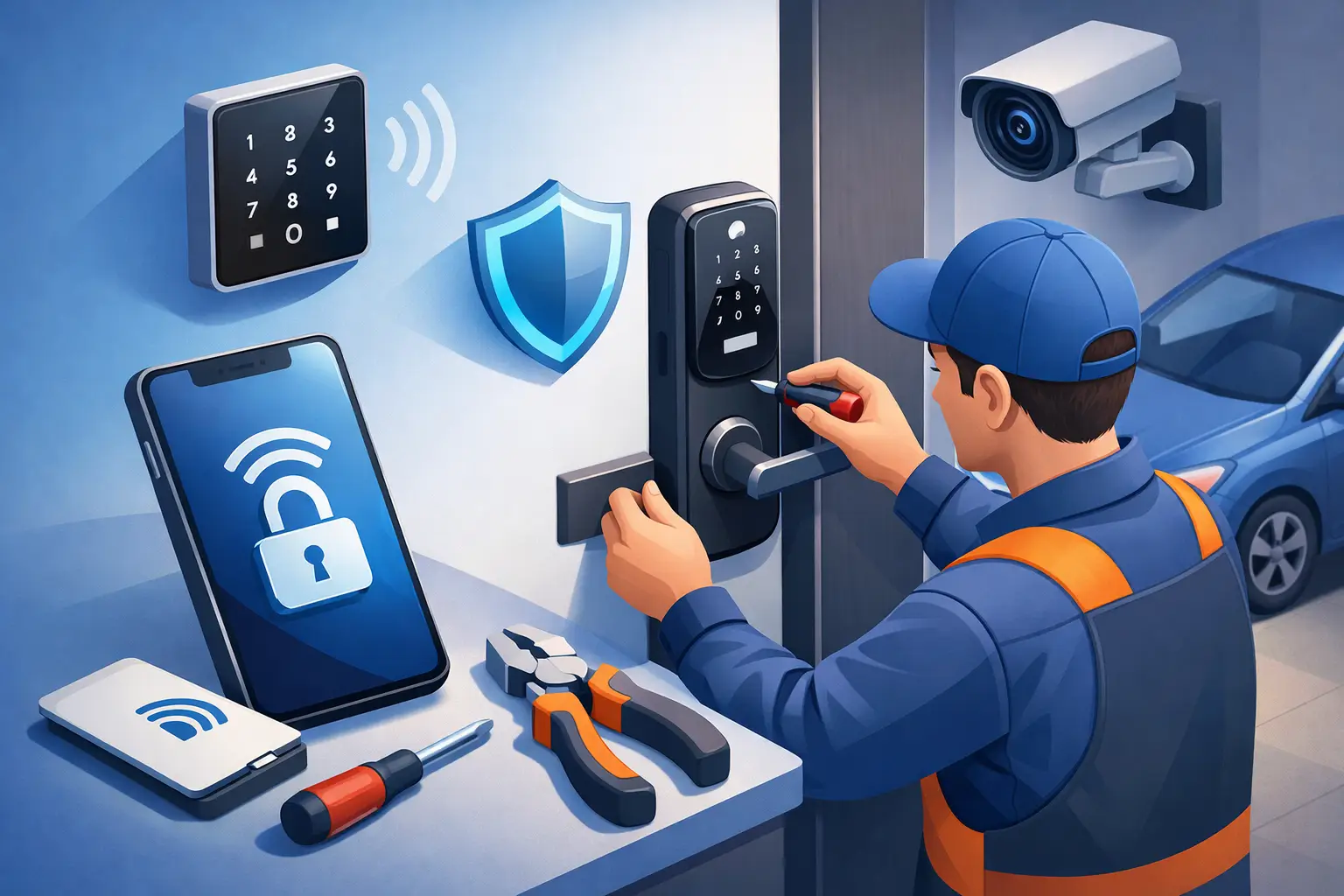
Keyless entry systems come in several forms. A keypad lock uses a PIN, while card and fob systems give each user a physical credential. App-based locks allow access from a mobile, and more advanced access control can record entry events, set time schedules and manage multiple doors from one place.
The best choice depends on the property. A family home may only need a reliable keypad or fingerprint lock on the main entry, with a mechanical key override kept for emergencies. A small office may benefit from fobs that can be cancelled as staff change. For a warehouse, medical practice, strata building or site with several access points, a managed access control system often makes more sense because it gives an authorised manager clearer oversight.
Convenience should not be the only driver. Ask who needs access, whether access needs to be temporary, whether you need an audit trail and how damaging a lost credential would be. A simple keypad can be excellent for a side gate or storeroom, but shared PINs are harder to track. If the same code is used by ten people, it should be changed whenever one person no longer needs it.
Choosing hardware that suits the door
Not every smart lock or electronic reader fits every door. Before selecting equipment, a locksmith should check the door material, thickness, handing, frame condition, existing lock preparation and the type of latch or deadlock already in place. A lock that looks suitable online may not work with a narrow aluminium stile, a heavy commercial door or a fire-rated door.
External doors also need hardware designed for Australian weather conditions. Heat, rain, dust and direct sun can affect keypads, readers and batteries over time. A unit fitted beneath cover on a residential entry has different demands from one exposed at a commercial gate or apartment common area.
Door strength matters as much as the electronic lock itself. There is little value in fitting sophisticated access hardware to a loose strike plate, damaged frame or weak door closer. Good installation looks at the whole opening: the lock, latch, hinges, strike, frame and closing action all need to work together.
Battery, wired and networked systems
Battery-powered locks are often the least disruptive option for existing homes and small offices. They can be installed without extensive cabling and usually provide low-battery warnings well before power runs out. Their trade-off is routine battery maintenance and, depending on the model, fewer advanced features.
Wired systems are generally better suited to higher-use commercial doors and multi-door sites. They can support electric strikes, magnetic locks, intercoms, exit devices and central management, but require careful cable routing and suitable power supply planning. Installation may involve coordination with electricians, builders or fire contractors.
Networked systems can provide useful remote management, but they should not create unnecessary dependence on an internet connection. Ask what still works during an outage, who controls the administrator account and how user data is protected. The practical answer is often a system that continues to operate locally while remote features resume once the connection returns.
What professional keyless entry system installation involves
A professional installation begins with a site assessment, not a product catalogue. The installer should understand how the door is used throughout the day, whether it needs free entry at certain times, and whether people must leave quickly in an emergency.
For commercial premises, safe exit is critical. Doors on escape routes must allow people to leave without delay or specialist knowledge. Fire doors, apartment common areas and buildings with specific compliance requirements need particular care. Changing a lock or fitting an electromagnetic lock without considering egress, door certification and building rules can create a serious safety issue.
Once the system is selected, the installer prepares the door accurately, fits the lock or reader, secures cabling where required and tests the door operation. They should check that the latch engages cleanly, the door closes properly and users can enter and exit as intended. On electronic systems, testing should also cover low-power behaviour, credential enrolment, code changes and any emergency override.
The handover matters. The person responsible for the property should know how to add and remove users, change codes, replace batteries and use any mechanical override. For businesses, administrator access should not sit with just one employee. Keep a clear record of who has administrator rights and arrange for access to be transferred when managers change.
Common mistakes that reduce security
The most common issue is choosing a lock based only on appearance or app features. A low-cost unit may be adequate for an internal cupboard, but a front entrance, office or common access door needs durable hardware and a proper fit.
Another mistake is treating credentials casually. Do not leave spare fobs unrecorded, share one PIN across a workforce or allow a former tenant to retain access through an old app account. Individual credentials take a little more time to manage, but they make access changes much simpler and more accountable.
It is also wise to avoid relying on one access method. A keypad can be useful, but a fob, mobile credential or mechanical override provides a backup if a user forgets a code or the battery needs attention. The right backup depends on the premises and should not compromise the security you are trying to create.
Finally, do not postpone maintenance until the lock fails. Check batteries before they are flat, clean keypads and readers as recommended by the manufacturer, and have sticking doors or misaligned latches repaired early. Electronic hardware cannot compensate for a door that is swelling, sagging or failing to close.
When keyless access is worth the investment
Keyless entry is particularly useful where access changes often. Landlords and property managers can reduce the need to recover physical keys between tenancies. Business owners can remove a departing employee’s access without rekeying every door. Families can provide time-limited access for a cleaner, tradesperson or older child without leaving a key under a mat.
It may be less necessary for a rarely used internal door or a property where only one or two trusted people ever need entry. In those cases, a quality mechanical lock and sensible key control may be the better value. Security is not improved by adding technology that nobody knows how to manage.
For larger sites, keyless systems can form part of a broader security plan alongside restricted keys, master key systems, door closers, intercoms and secure storage. The goal is not to make every door complicated. It is to make access easy for authorised people and difficult for everyone else.
Night & Day Locksmiths can assess the door, the people using it and the level of control you need before recommending a suitable solution. As a family-owned, fully licensed local locksmith with decades of experience, the focus is on a system that works reliably long after the first day it is fitted.
A good place to start is the door that causes the most friction: the entry where keys go missing, staff wait outside or access changes too often. Solving that one door properly can make the rest of the property safer and easier to manage.