A front door that latches shut is not always a front door that offers the level of security you expect. Deadlock installation for homes gives the door a positive key-operated lock that cannot simply be opened from outside by operating the handle or latch. For Canberra households, it is a practical upgrade after moving in, replacing a worn lock, or reviewing security following a break-in nearby.
A deadlock is not a one-size-fits-all answer. The right lock depends on the door, its frame, how the property is used and, most importantly, how people can leave safely in an emergency. A licensed locksmith can assess those details before cutting into a door or recommending a product that looks secure but does not suit the household.
What a deadlock adds to your home security
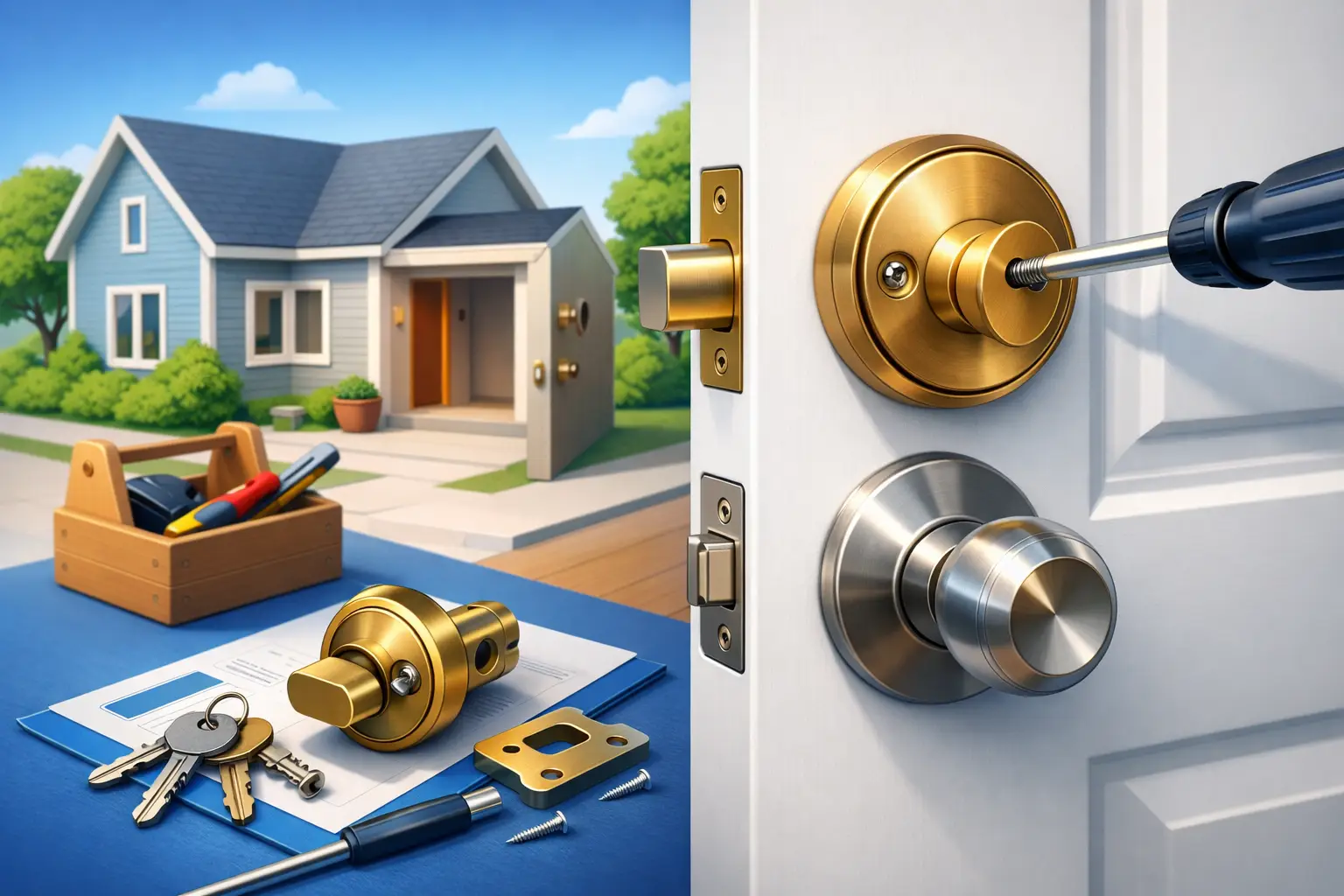
Most external doors use a latch as part of a knob, lever or entrance set. A latch keeps the door closed and is convenient for daily use, but it may not provide the same resistance as a properly installed deadbolt. A deadlock uses a solid bolt that extends into the door frame when locked with a key or internal turn.
That bolt is the key difference. It creates a firmer connection between the door and frame, making forced entry more difficult when the lock, strike plate and fixings are correctly matched. It also means the door remains locked even if someone manipulates the handle or latch from outside.
For many homes, a deadlock works best as part of a layered approach rather than as the only security measure. A solid-core door, a sound frame, quality hinges, exterior lighting and secure windows all matter. There is little benefit in fitting a high-quality deadlock to a weak, damaged door frame with a loose strike plate.
Which doors are suitable for a deadlock?
The front door is usually the first place homeowners consider, particularly if it is the main access point from the street, driveway or garage. Rear and side doors can deserve just as much attention. These entrances are often less visible from the road and may be used less frequently, which can make lock problems easy to miss.
Timber doors are commonly suitable for deadlocks when they are in good condition and have enough material around the intended lock position. Metal security doors, aluminium-framed doors, uPVC doors and sliding doors need a different approach. They may require purpose-made hardware or a different locking solution entirely. Forcing a standard deadlock onto an unsuitable door can damage the door, weaken the frame or leave the lock operating poorly.
Door thickness and clearance are also important. The bolt needs to throw cleanly into a properly positioned strike in the frame. If the door has warped, dropped on its hinges or moves significantly with seasonal changes, the bolt can bind. That makes the lock difficult to turn and encourages people to force the key, which can cause a failure at the worst possible time.
The door frame matters as much as the lock
A deadlock is only as effective as the part it locks into. The strike plate should be securely fixed to sound timber or an appropriate reinforced section of the frame. Long, suitable screws and correct alignment help spread force beyond the thin face of the frame.
A professional installation checks the whole opening, not just the circular hole in the door. If the frame is split, soft from moisture damage, or badly misaligned, repairing that issue may be the sensible first step. It is a better result than installing a new lock that never operates smoothly.
Keyed deadlocks, internal turns and safe exit
The way a deadlock is operated from inside the home deserves careful thought. Some locks require a key on both sides, while others use a key outside and a thumbturn inside. Both arrangements can be appropriate in particular circumstances, but they have different security and safety considerations.
A double-cylinder deadlock may prevent someone from reaching through a nearby broken glass panel to turn an internal thumbturn. However, a key must be readily available for occupants to unlock the door from inside. It must never be hidden away, misplaced, or left in a spot that is hard to reach during an emergency.
A key-and-thumbturn deadlock can offer easier exit because occupants do not need to find a key to unlock it from inside. Yet a nearby glass panel, pet door or accessible opening can change the risk. The best choice depends on the door design, the people living in the property and how the entrance is used.
If children, older family members, tenants or visitors use the door, clear routines are essential. Everyone should know how the lock works. A security upgrade should not leave someone confused about how to get out quickly if there is a fire or another emergency.
Deadlock installation for homes is not a simple drilling job
Fitting a deadlock accurately requires more than a drill and a template. The lock body, bolt, cylinder and strike must line up precisely. The installer needs to account for the door’s construction, existing hardware, frame condition and the clearance needed for the bolt to move freely.
Small errors can create ongoing problems. A bolt that rubs against the strike may eventually become stiff or fail to lock properly. A cylinder installed at the wrong length can sit proud of the door and be more vulnerable to damage. Poorly placed holes can also leave a door weakened, marked or difficult to repair.
This is why a licensed locksmith is a sensible choice for external door locks. They can recommend hardware suited to the application, install it cleanly and test operation from both sides. They can also identify whether rekeying other locks to one convenient key, replacing worn handles or upgrading a screen door would make the overall setup safer and easier to use.
When to install, replace or rekey a deadlock
A new deadlock is worth considering when you have moved into a home and do not know who may still hold keys. In some cases, rekeying an existing compatible lock is enough. Rekeying changes the internal configuration so old keys no longer work, which can be faster and more economical than replacing quality hardware.
Replacement may be the better option when the lock is difficult to turn, the key is worn or loose in the cylinder, the bolt does not extend fully, or the lock has visible damage. Do not wait for a lock to seize completely. A sticking deadlock can turn a routine departure into a lockout, especially if it fails while the door is secured.
It also makes sense to review locks after a lost key, a tenancy change, a relationship breakdown, building work that involved spare keys, or an attempted break-in. These are moments when security is no longer just about the lock’s physical condition. It is about controlling who can enter the property.
Choosing the right locksmith and lock
Price matters, but the cheapest call-out is not always the best value when the work protects your home. Ask whether the locksmith is licensed, whether they inspect the door and frame before quoting, and what lock operation they recommend for safe exit. A clear explanation is a good sign that the advice is based on your property rather than a one-product sale.
For local homeowners, an established mobile locksmith can be particularly useful if a lock has failed after hours or a security concern cannot wait. Night & Day Locksmiths has supported Canberra homes and businesses since 1979, with licensed technicians available for urgent lock issues as well as planned security upgrades.
Keep the keys to a deadlock under control after installation. Limit copies, collect keys from previous occupants or trades where possible, and have additional keys cut only for people who genuinely need access. If convenience is becoming a problem, ask about compatible restricted key systems or other access options rather than leaving a spare key in an obvious place.
A properly selected deadlock should feel uncomplicated in daily use: the key turns smoothly, the bolt engages cleanly and everyone in the household understands how to lock and unlock the door. That quiet reliability is what makes a good security upgrade worthwhile.