
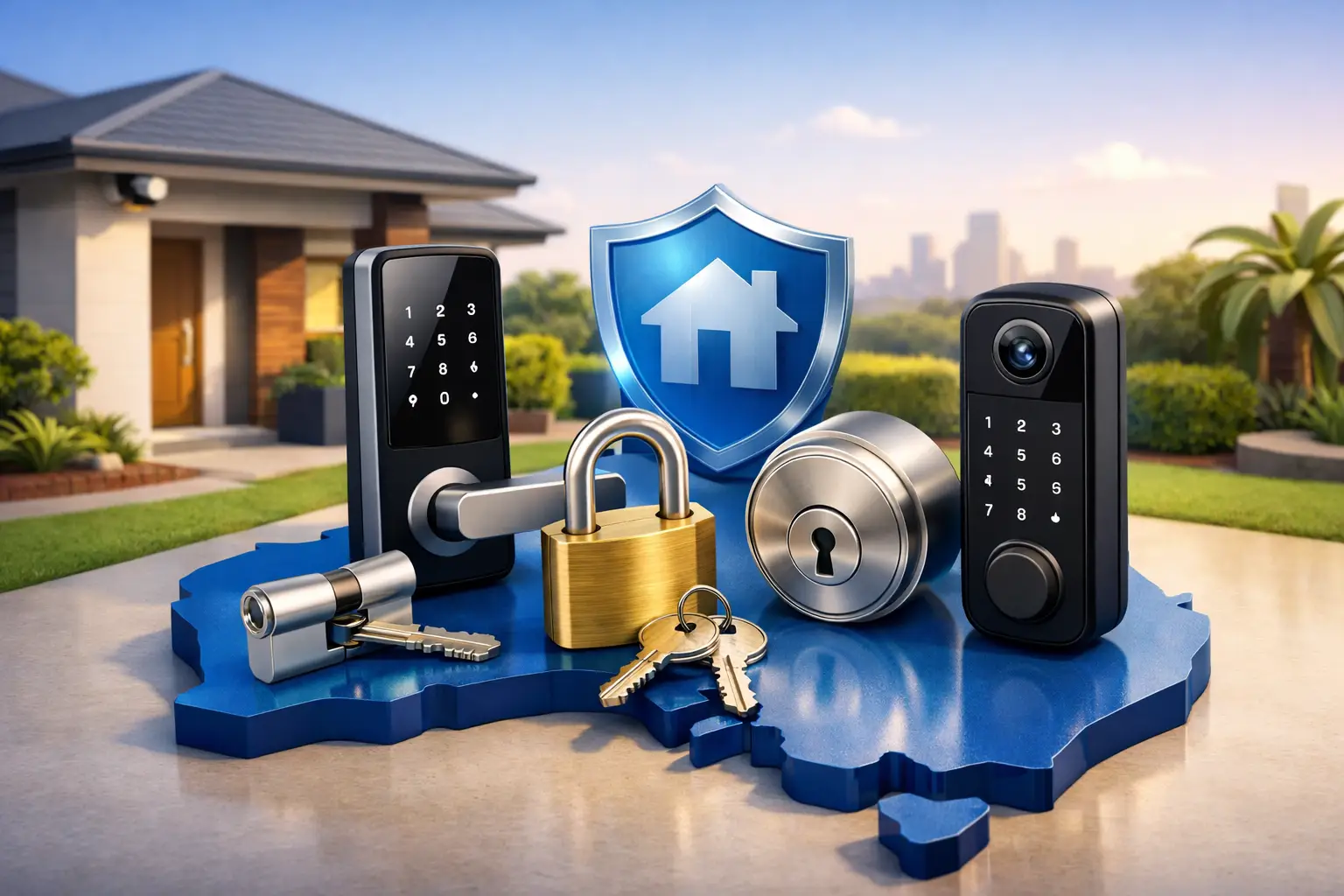
A front door can look solid while its lock, strike plate or frame remains the weak point. The best locks for home security are not simply the most expensive products on the shelf. They are locks suited to the door, fitted correctly, protected from common attack methods and supported by sensible key control.
For Canberra homeowners, security often starts after a move, a lost key, a break-in nearby or a lock that has begun to stick. Those are all good reasons to review your doors and windows before a small issue becomes an urgent one.
Start with the door, not just the lock
A quality lock cannot compensate for a hollow-core door, loose hinges or a weak timber frame. Before choosing a lock, assess the whole entry point: the door construction, frame condition, hinges, glass panels, existing hardware and how the door opens.
Solid timber, metal and quality security doors generally provide a better base for secure hardware than lightweight doors. Outward-opening doors need particular attention to hinge security, while doors with nearby glass may need a locking arrangement that cannot be easily reached by breaking a pane.
The lock’s strike plate matters just as much as the cylinder. When a locked door is forced, the strike and the screws holding it to the frame take much of the pressure. A properly fitted, heavy-duty strike plate secured with long screws into the structural frame gives a deadlock far more value than a basic strike fitted with short screws.
The best locks for home security by entry point
There is no single lock that suits every home. Most properties benefit from a combination of lock types, selected according to the door’s purpose and the level of exposure.
Deadlatches for main entry doors
A deadlatch is a common and reliable choice for a hinged front door. Unlike a standard latch, it is designed to resist slipping or forcing back with a card or similar tool when correctly installed. Many deadlatches can be locked from the inside and outside, offering everyday convenience without sacrificing security.
For a front door, look for a quality deadlatch with a solid construction and a properly matched strike. A double-cylinder version requires a key from both sides, which can provide additional protection where glass is close to the lock. However, it also creates an important safety consideration: occupants need to be able to exit quickly in an emergency. This option should only be used where it suits the door layout and household needs, with the key kept in a known and accessible location when people are home.
Deadbolts for an extra layer of protection
A deadbolt adds a separate locking point and is a strong choice for solid external doors. Because it does not rely on a spring latch, it provides a positive physical lock when engaged. It is particularly useful on front, rear and side doors that are exposed or less visible from the street.
A single-cylinder deadbolt is usually operated by a key outside and a thumbturn inside. This is convenient for quick exit, but may not be appropriate if there is easily breakable glass within reach of the thumbturn. A locksmith can assess whether a different configuration, glass protection or another lock type is the safer option.
Deadbolts work best when they are installed into a sound door and reinforced frame. Fitting one to damaged timber or a poorly aligned door can lead to unreliable operation and reduced protection.
Mortice locks for high-use or premium doors
Mortice locks are fitted within a pocket cut into the edge of the door. They can combine a latch, deadbolt and handles in one integrated unit, making them a practical option for many timber doors and higher-specification entry sets.
Their security depends heavily on the quality of the lock body, cylinder, door preparation and installation. A well-fitted mortice lock can be an excellent long-term choice, especially where you want a clean finish and durable hardware. It is not generally a DIY job, as inaccurate cutting can weaken the door or leave the lock misaligned.
Security screen door locks
A locked screen door allows ventilation while maintaining a barrier at the entry. It is a useful addition in warmer months, but only if the screen itself, its frame and the lock are all designed for security. A basic flyscreen door with a light latch should not be treated as a security door.
Choose a purpose-built security screen system with quality locking hardware and secure fixings. The main entry door should still have its own suitable lock. A screen door is an additional layer, not a replacement for securing the primary door.
Smart locks and keyless entry
Smart locks can be convenient for busy households, rental properties and homes where family members regularly need access. Depending on the model, access may be managed with a PIN, card, mobile app or traditional key override. They can also reduce the problem of spare keys being left under mats, in letterboxes or with people who no longer need access.
The trade-off is that smart locks need careful product selection and setup. Choose a reputable lock suitable for Australian doors, ensure there is a reliable mechanical override or appropriate backup plan, and keep batteries maintained. A smart lock should also be fitted to a secure door and frame – technology does not make weak hardware stronger.
For landlords and property managers, keyless access can simplify tenancy changes, but access permissions must be removed promptly and the physical security of the property still needs regular inspection.
Do not overlook windows, sliding doors and garages
A home is only as secure as its easiest entry point. Rear windows, sliding doors and garage access are often overlooked because they are less visible from the street.
Sliding doors should have a suitable lock as well as an anti-lift device where needed. A door that can be lifted out of its track remains vulnerable even with a functioning lock. Windows may need keyed locks, particularly on accessible ground-floor windows. As with double-cylinder door locks, consider emergency escape requirements before locking windows in bedrooms or areas used as an exit route.
The internal door from an attached garage also deserves the same attention as a front or back door. Garages can contain tools that help an intruder force other entry points, as well as direct access to the home.
Key control is part of home security
Installing a new lock is the right time to decide who should have keys. If you have just bought a property, rekeying or changing locks is sensible even when the previous owner appears trustworthy. You cannot know how many copies are held by former occupants, tradespeople, neighbours or extended family.
Rekeying changes the lock so existing keys no longer work, often without replacing all the visible hardware. It can be a cost-effective option when the locks are in good condition and compatible. Replacing the lock is preferable where the hardware is worn, unsuitable or has been damaged.
Restricted key systems add another level of control. These keys are harder to copy without authority, which can be useful for households with cleaners, carers, contractors or frequent property access. The right system depends on how many doors are involved and how tightly you need to manage copies.
Installation quality makes the difference
Even the best lock can underperform when it is poorly fitted. A lock that binds, has excessive gaps around the bolt, sits in a loose strike or requires the door to be lifted before it turns may not secure as intended. It can also leave you locked out at an inconvenient time.
Professional installation helps ensure the lock is compatible with the door, aligned correctly and fixed into sound material. It also gives you the chance to assess hinges, strike plates, door closers, security screens and key control as one system rather than a series of separate purchases.
For older Canberra homes, changing seasons can affect timber doors and frames. If a lock becomes stiff or the latch no longer lines up cleanly, arrange repairs before it fails completely. Forcing a key or repeatedly slamming the door can damage the mechanism and turn a straightforward adjustment into an after-hours lockout.
A practical way to choose
Start with the doors used to enter the home every day, then work through less obvious access points. A solid main door may suit a quality deadlatch and deadbolt or a properly fitted mortice lock. A sliding door may need a dedicated lock and anti-lift protection. Accessible windows, screen doors and the garage-to-house door should be reviewed as part of the same plan.
Night & Day Locksmiths can assess existing hardware, advise on suitable lock options and fit security upgrades that match the way your household uses the property. The right result is not a complicated collection of locks. It is a home where every practical entry point is secure, reliable and easy for the right people to use.